Living the Abundant Life

The last few months have flown by and I haven’t been able to blog as much as I would like.  So here is a Williams “Catch Up” post.


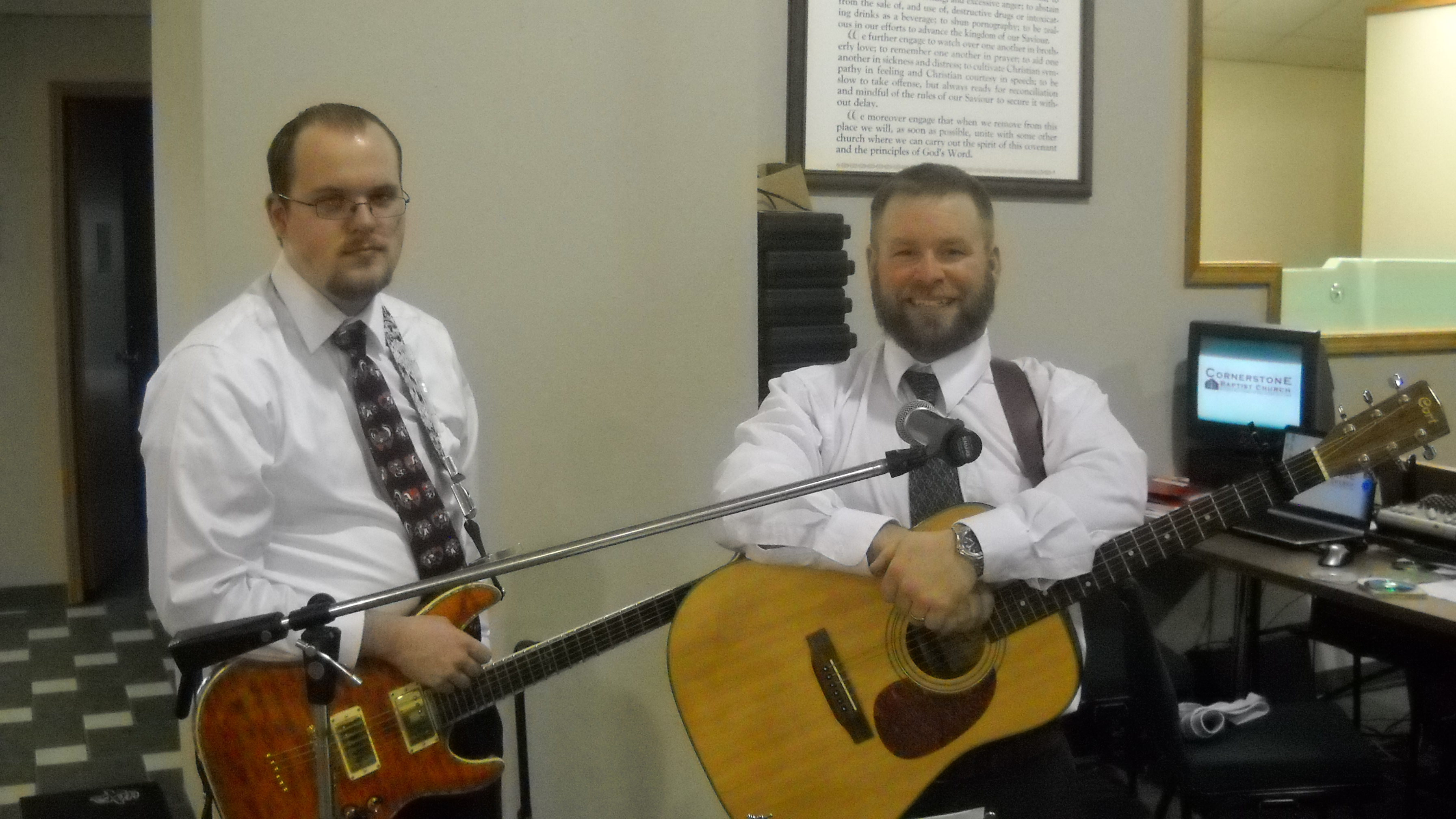
It’s hard to believe that it is already the middle of March.  This past year has flown by.  In January we started back at the Consortium each Wednesday. (Our church has been so gracious to open up the building as well as serve lunch to all the students and teachers each week.  I am truly blessed to be a part of Cornerstone and what God is doing there.) The three A’s each took a full day’s worth of classes and really enjoyed them (plus all the socializing with friends).

Dana taught a Biblical Greek class.  The class learned a lot of practical application on how to study their Bible and seemed to enjoy it, but they did complain about all the homework.  I tried to tell him that homeschooling students are not use to doing homework…..

I taught Blogging 101. During the class we created an ETC Youth blog.  You can check it out here.  My students also created their own personal blogs just for fun. Aaron complains that they never gets visitors, so please go check out their blogs …..poor things.

Abigail

Aaron

Caitlyn

Hannah

Levi

Rachel

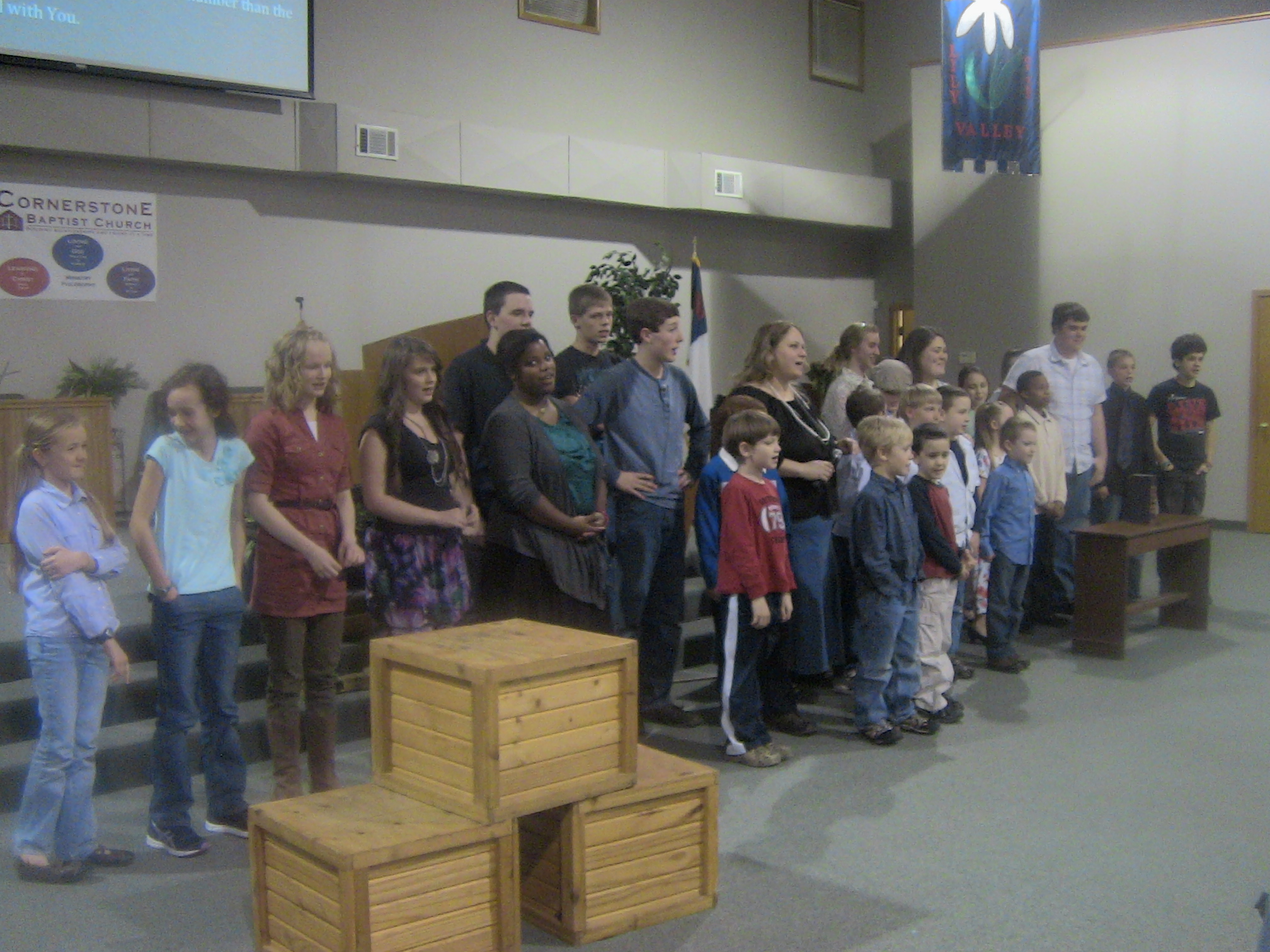
At the end of the quarter we held an Exhibition Program at Cornerstone.  There were tons of great performances.  We have a lot of talented children in our 65+ family homeschool group.  During the night the Drama Class put on short play called the Emperors New Rags.  Guess who played the part of the king?

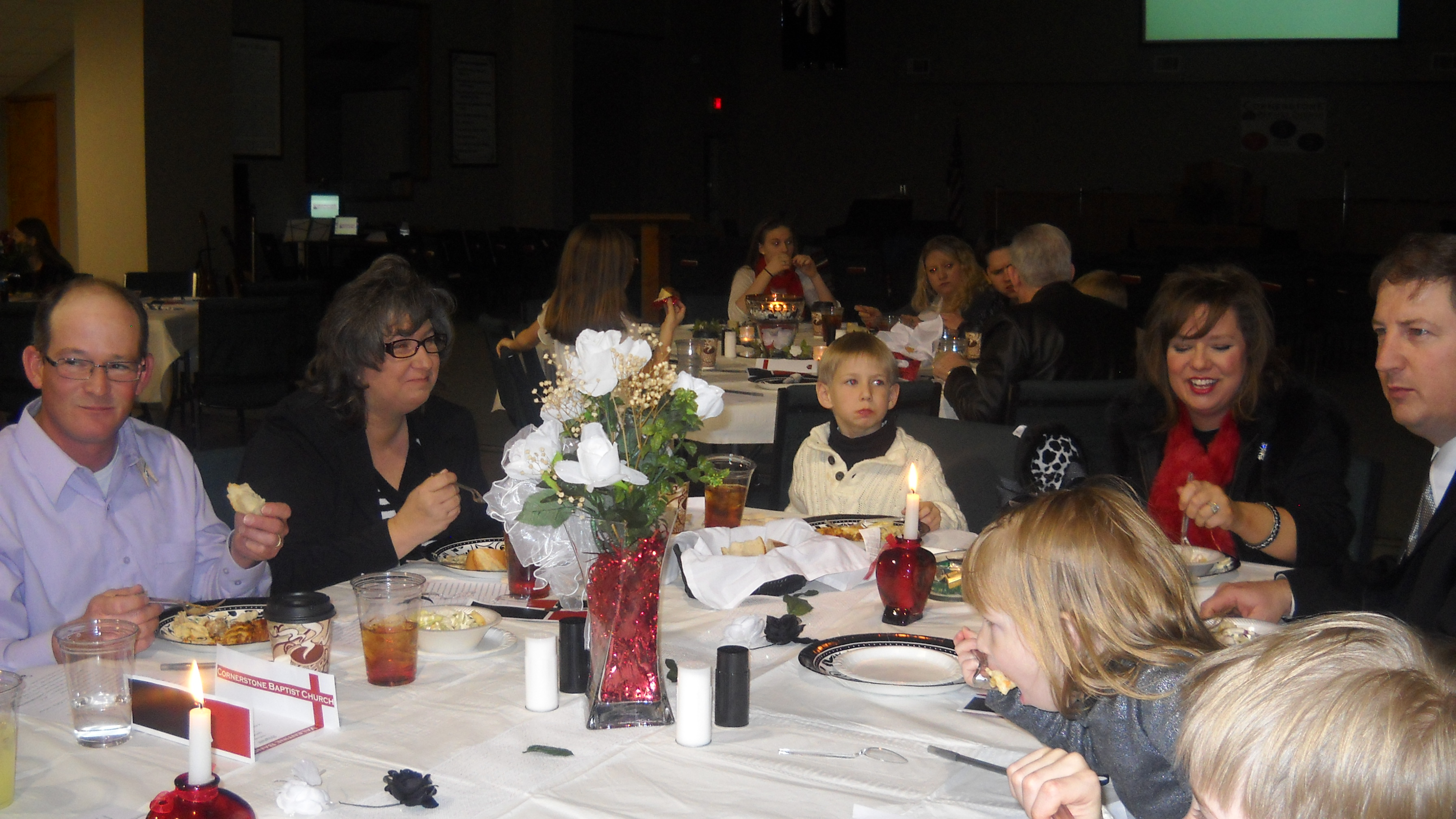
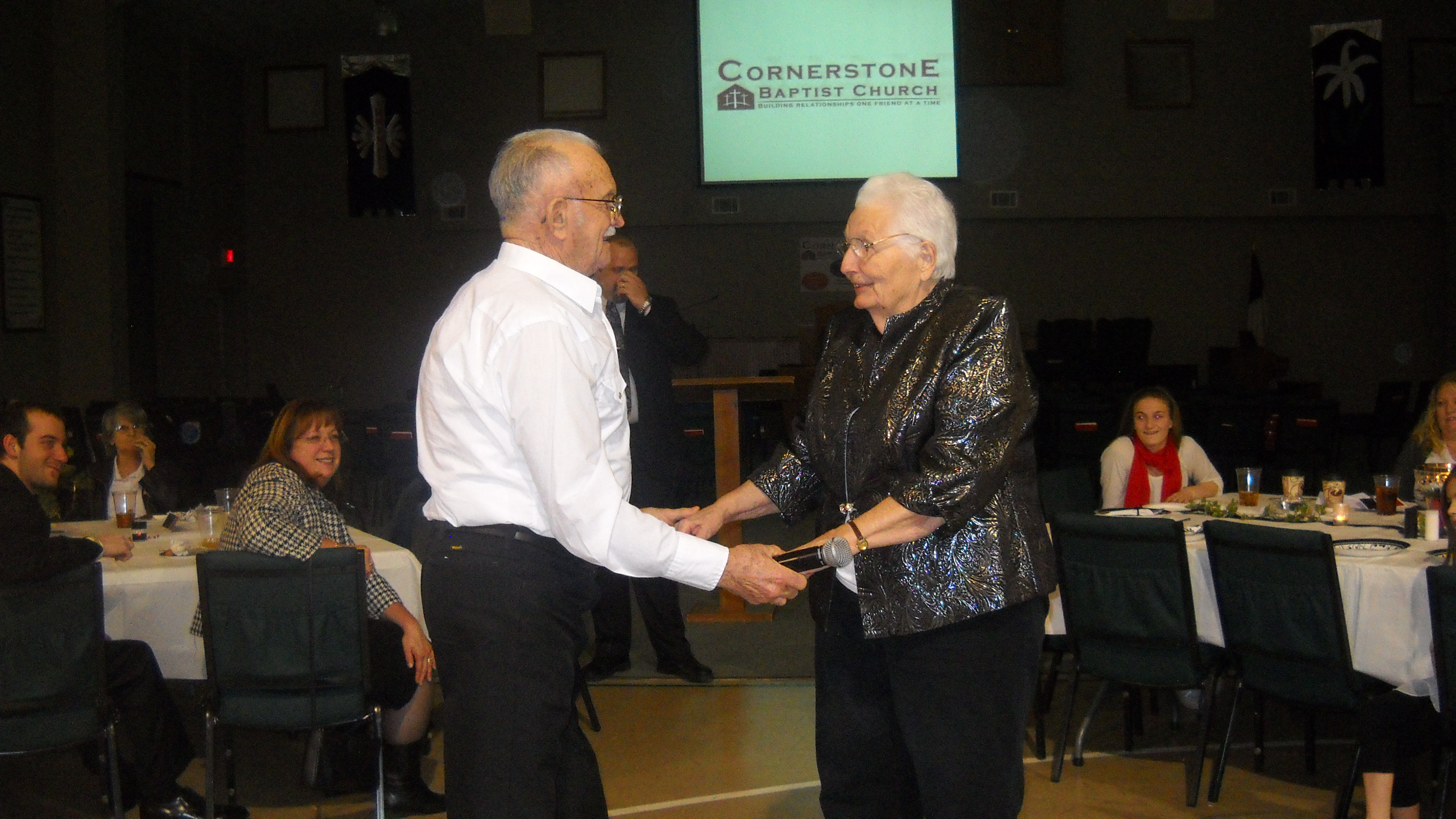
In February Cornerstone hosted a very successful Valentine’s Banquet. One of the best things about our church is the love we have for one another.  So this was a wonderful opportunity to share our love and God’s love with others outside the church.

The children enjoyed a small snow day during the month of February.  Being our first year back in Arkansas I, of course, expected a bigger winter.  But that’s okay.  They still had fun.

It didn’t last long.  The next day we were all in t-shirts driving around town with the sunroof open.  I do believe that winter is over.

Some of the families in our homeschool group took a field trip to a local fire station a few weeks ago.  We took my 2 year old nephew and he spent the day with us.  This was his first time to be with us by himself.  We are so thankful to be close family again!  Have I said that already?

Dana and I have both been extremely busy.  He has more projects than I care to mention.  But he’s loving every minute of it.

And I have been somewhat consumed finishing up my 4th book.

So, we decided to take a Saturday a couple of weeks ago and spend it at Devil’s Den State Park.  Dana and I have not been there in years. We took a picnic and spent the afternoon hiking.  It was a wonderful family day.

God has certainly blessed our family.  I am looking forward to seeing what He has in store for us and excited about what the future holds.  So until next time, I’ll be here….living that abundant life.

“I am crucified with Christ: nevertheless I live; yet not I, but Christ liveth in me: and the life which I now live in the flesh I live by the faith of the Son of God, who loved me, and gave himself for me.” (Gal 2:20)

State Testing, Standardization, and Godly Standards

With state testing approaching, I’ve had a lot of questions from homeschooling parents about how to prepare and the overall process.  I must say that I am hardly an expert on the subject.  My 15 year old took the Arkansas state test when he was in 3rd grade. After that we moved to a state that did not require state testing.  Now that we have moved back to Arkansas, my children are required to take the standardized tests.  So, we picked up some practice booklets this week.  We got them mostly so the children could practice.  After all, Abigail and Andrew have never “filled in bubbles”.   

When we talk about standardized testing, here is what I want Christian homeschooling parents to know.  If being “standardized” is conformity to a standard, then we need to decide as parents what standard we want our children conformed to.  I wrote an article for Homeschool Enrichment a couple of years ago called Whose Standards Do We Follow.  It is posted below.  I hope that as you are preparing your children for testing this year that it is done with much prayer and with God’s standards in mind.  Blessings!

Whose Standards Do We Follow?

“Mom, who is Oprah Winfrey?” my son asked one day sitting at the kitchen table.  The state we lived in required standardized testing for 3rd through 9th grade.  My son, then 8 years old, was reviewing a practice booklet when he asked the question.  After explaining to him that she was a TV celebrity he asked, “Why do I need to know that?”  With a smile in my heart I replied, “You don’t.”  Later that evening I showed the book to my husband and pointed out several points of concern.  We had come to the conclusion that since the tests were from a secular, humanist, and evolutionary point-of-view, our son would simply be at a disadvantage in taking them.   “Sweetheart, don’t worry about it.”  He said.  “After all, do we really want our children to be standardized?”

It is that very question that we have asked every year since.  As Christian parents do we want our children to be like the rest of the world?  Unfortunately, it is a very easy trap to fall into.  We have a vested interest in our children and want the best for them.  The question is, “What is best?”  Many would agree that if children excel in academics, are well rounded in their social development, are active in sports, can play a musical instrument, are learning a foreign language, score high on the ACT, get a scholarship into a good college, and go on to make a high-paying career for themselves that they are successful.  While the world would unquestionably view this as success, as a believer in Christ, these are not necessarily my standards.  The Apostle John wrote in 1 John 2:15-17 to “Love not the world, neither the things that are in the world. If any man love the world, the love of the Father is not in him. For all that is in the world, the lust of the flesh, and the lust of the eyes, and the pride of life, is not of the Father, but is of the world. And the world passeth away, and the lust thereof: but he that doeth the will of God abideth for ever.”  If we are not careful, our families will indulge in and love the things of this world. This kind of love is to our detriment, for there is a world system that we are not to love or cling to.  The world will pass away therefore the way we live and the standards we set for our children need to be with eternity in mind.  Otherwise, we have sold our children short, “For what is a man advantaged, if he gain the whole world, and lose himself, or be cast away?”(Luke 9:25)

Is it wrong to want our children to excel in academics?  Absolutely not!  But if academic excellence is the goal without the foundation of God and His Word then our priorities are misplaced.  “If ye then be risen with Christ, seek those things which are above, where Christ sitteth on the right hand of God. Set your affection on things above, not on things on the earth.” (Colossians 3:1- 2)  While I want my children to do well in their educational pursuit, I want to measure their success by God’s standards and not the worlds.  Everything that is passed through their minds need to be filtered by the Word of God.  When I taught my 5 year old subtraction my goal was not that he learned the simple mathematic fact of ten minus one equals nine.  My goal was much higher.  Instead, I took him to Luke Chapter 17 and showed him the story of Jesus healing the 10 lepers.  He learned that nine went away and one came back giving thanks to Christ and glory to God.  When we teach with a Biblical mindset, math becomes more than just a lesson.  It becomes an exercise in godliness.

My most important goal as a parent is to teach my children to love the Lord God with all their heart, soul, mind and strength, first and foremost!  Secondly, would be to love their neighbor as their self.   Jesus said that on these two commandments hang all the law and prophets. (Matthew 22:36-40)  I also want to teach them to work hard (Colossians 3:23), not to impress others with their intelligence or for self-centered achievements, but because in working hard we give God glory.  Everything we teach our children can point to God and His glory.  While these goals soar above all others and I fail miserably at times, in truth they are the only ones worth pursuing.  To see how this is practically applied let us look at a few of the core subjects that most children are taught.

Language   –   Whether your child is just learning phonics and how to read or he is diagramming sentences and writing papers, you can easily teach with an eternal perspective.  What is the goal in teaching my child to read?  The most obvious would be that he can read the Bible.  The Creator of the universe and of all that is seen and unseen has given His Word in written form so that we can know Him.  What better motive for teaching my child to read than that?  Why teach my child how to write, speak, and spell properly?  The main reason would be so that he can communicate the glorious gospel to those around him.   Any other achievement would be secondary.  Perhaps, in pursuing the English language your child wins a spelling bee or scores high on a test.  If so, give God the glory.  But do not let those things be your motivation.   The mastering of additional languages can point others to Christ as well.  Perhaps your family is learning Spanish for this reason alone.  Many hearts have been changed and lives given to Christ in foreign lands.  And whatsoever ye do in word or deed, do all in the name of the Lord Jesus, giving thanks to God and the Father by him. (Colossians 3:17)  “Whatsoever ye do” includes phonics, handwriting, spelling, speech, debate, foreign languages, and language composition.

Math  –  What does a Biblical standard verses a worldly standard look like in teaching mathematics?  We have already looked at teaching a small child using Bible stories.  What other incentives do we have for teaching our children math?  One very practical reason is so that our children will be good financial stewards.  My children might not use higher math such as calculus or trigonometry on a daily basis but they will need basic math skills to be able to balance a check book, pay bills, go to the grocery store, or run a business.  All of these things when well done lend to a good testimony for our Lord.   But it could be that our children have a natural gift for mathematics and are able to go on to use their advanced knowledge for the glory of God.  Sir Isaac Newton, mathematician and physicist, would be a wonderful example of this very thing.

Science  –  Biology, ecology, meteorology, geology, and all the other “ologies” are good things to learn.  It is good to know the periodic table and about the laws of the universe but does my child know the Maker of the universe?  Does my child look at a blade of grass or an animal and see God’s handiwork?  Have I taught my child to stand back and look at all of creation in awe and wonder?   Or am I teaching mere facts in order to pass a test and proceed onto the next course of study?  True science will always point us to God.  Louis Pasteur, Father of Microbiology, said it like this, “The more I study nature, the more I stand amazed at the work of the Creator.  Science brings men nearer to God.”

History  –  It would be impossible to teach all there is to know about history.  There is simply too much information.  If we are not careful this subject can become dull names, tedious dates, and boring facts.  However, if we look at history through the sovereignty of God it becomes His Story.    When we realize that nations rise and fall and that the hearts of kings are stirred by God Almighty our perspective on history changes.  What better opportunity to teach our children Biblical morals and values than to have them read about and study godly characters from the past like George Washington?  In studying history we can also teach the mistakes that mankind has made in the past so that our children and future generations are not doomed to repeat them.   We can learn about important moments in history like when Samuel Morse sent the first telegraph message, “What hath God wrought” taken from the Scriptures.  Or perhaps, in our studies of Italy, as we discover the Leaning Tower of Pisa we can use the opportunity to teach our children spiritual truths about building upon a solid foundation.

Bible  –  While most Christian home school families use a Bible curriculum, it is important to remember that even in studying Scripture we can have a worldly mindset.  Every motive should be examined.  If we only teach parables from the Bible without practical application, if we only teach the law of God without the grace and love of God, and if we only teach Scripture memorization without meditation, we come dangerously close to creating little Pharisees.  It is more important to me that my child loves the Word of God than that my child is able to give a dissertation on the missionary journeys of Paul.  While studying the Apostle’s life is important, if my child truly loves the Word of God he will enthusiastically learn as much as he can about the Bible.  If we develop a love for the Word of God in our children and teach them to diligently seek Him we have given our children a precious gift that can never be taken away.

Learning should be an everyday occurrence and it should not be divided up between secular and spiritual.  As a believer everything should be spiritual.  This happens when we incorporate the things of God into our daily studies and activities.  In doing so it changes not only how we teach but why we teach.  We are no longer just concerned with the outcome but now with the process and the application.  Let’s look at an example of teaching my daughter home economics.  Perhaps by the world’s standard she should learn how to cook, sew and take care of a baby.  But is that enough?  In addition to teaching her the fundamentals, by God’s standards I would teach her from Titus 2:4-5 to “be sober, to love their husbands, to love their children, to be discreet, chaste, keepers at home, good, obedient to their own husbands, that the word of God be not blasphemed.”  By the world’s standards it is good for boys to take a shop or woodworking class.  But the application of that would be that my sons learn “to study to be quiet, and to do your own business, and to work with your own hands, as we commanded you; That ye may walk honestly toward them that are without, and that ye may have lack of nothing.”(1Thessalonians 4:11-12)  I should teach them not only how to work with their hands but also how to be the sole-provider for their families (I Timothy 5:8).

So the question is, “By what standards will we choose to live by?”  As Christian parents we must keep in mind that we will be accountable for the education of our children not based on the world but on God and His Word.  In that knowledge there is great responsibility but also great peace.  Responsibility in that we will answer to God alone for how we teach and train our children.  Peace in that we are not bound by the world’s standards for our children.  Remember that academic excellence is a commendable goal but it must be properly laid with the correct foundation.   “For other foundation can no man lay than that is laid, which is Jesus Christ. Now if any man build upon this foundation gold, silver, precious stones, wood, hay, stubble; Every man’s work shall be made manifest: for the day shall declare it, because it shall be revealed by fire; and the fire shall try every man’s work of what sort it is. If any man’s work abide which he hath built thereupon, he shall receive a reward.” (1Co 3:11-14)  The builder (the Christian parent) needs to seek out the Architect himself (God) and use His own blueprints (the Scriptures).  The sure foundation is Jesus Christ and the gold, silver, and precious stones are those things that are of eternal value.  In the end nothing else will matter.  When the fiery trials of life come and when all our works are manifested, we want to know that what we have built into our children will last.  It is those things that we must pursue and by those standards that we must live by.

 Whose Standards Do We Follow by Kimberly Williams, Originally published in Homeschool Enrichment Magazine, Issue #44 March/April 2010 


The Woodcarver

The other night my family watched a great Dove family approved film called The Woodcarver. It releases on DVD next Tuesday, March 13th. This movie stars John Ratzenberger. (He is probably best known for playing mail carrier Cliff Clavin on the sitcom Cheers.) My children know him from his voice parts in Pixar’s films. (Hamm the Piggy Bank in Toy Story, The Abominable Snowman in Monsters, Inc. Mack the truck in Cars, etc.) Recently, he played a guardian angel in the movie What If.

Ernest, Ratzzenberger’s character in The Woodcarver, is down to earth and one that you will find yourself being drawn to.  The movie deals with real life issues that many face like parenting, marriage, divorce, work integrity, and the loss of a loved one.

Movie Synopsis:

Matthew Stevenson is a troubled kid from a broken home. When he vandalizes the local church to get back at his parents, Matthew has to repair the damage to the church to avoid criminal charges. While working at the church, he meets Ernest (John Ratzenberger), an accomplished wood carver who created the intricate woodwork decoration that Matthew destroyed. Ernest has become something of a hermit, but reluctantly comes out of reclusion to help repair the church. Now Ernest and Matthew must work together to preserve the church’s beautiful antiquity, and along the way, they also manage to restore their faith in God and in life.

I will say that this is one movie that I could not find any faults with. Trust me, I looked. The only thing that was a little strange was the way the Baptist pastor dressed like a Catholic priest. My husband is a Baptist pastor, so of course I would notice something like that. Most people wouldn’t care. But honestly, I really enjoyed this movie. My oldest son commented about the ending; he didn’t like it. But without giving it away, I will say that I thought it was a good portrayal of the reality of life. It was very touching. So go rent it on March 13th and find out for yourself.

The movie tagline is “Restoring their faith in God and in Life”. So a word to movie producers, keep up the good work by producing more movies like The Woodcarver and my faith just might be restored in the movie industry.

**  I wish I could send everyone a copy of this DVD, but I only have one to give away.  So leave a comment and I’ll pick one winner on March 13th to receive The Woodcarver DVD.

Disclaimer:  I received “The Woodcarver” DVD in exchange for an honest review.   I do not receive any other form of compensation for the reviews posted on this blog.

Happy are the Holy

I am sitting here this morning in sweet reflection.  The closing paragraph, last sentence, and final words to my 4th book were written last week.  It is off to the editor and in the hands of the man writing the forward.  The thought of it all brings great happiness.

The Epistles of John have been an incredible study for me personally.  The theme of the books is love.  It covers God’s love to us and our love to others.  But what I did not expect was the amount of love shown by the Apostle to his readers.  What makes his love so revealing is its under-girding of absolute truth.  John writes these letters so that believers might “know that they know” with confidence and assurance that they are in the faith.

Living Out the Word: Love has been perhaps the deepest and most heart revealing ladies Bible study that I have written.  John’s epistles gives a person a series of tests they can take to see if their faith is real.  Have you ever questioned your salvation?  Did you know that it is okay to do so?  In fact, we are commanded in Scripture to do just this.  “Examine yourselves, whether ye be in the faith; prove your own selves,” 2 Corinthians 13:5a.

One of the tests that Johns gives is purity.  I John 3:3 says, “And every man that hath this hope in him purifieth himself, even as he is pure.”  The “hope” this verse is referring to is the hope of Christ’s return (I John 3:2).  We often use “hope” as a synonymic word for “wish”. But do not mistake it here in this verse.  It does not mean wish, want, or desire.  The word conveys a stronger meaning.  The Greek word is elpis and it means having confidence in, earnest expectation, or anticipation.  Hope makes a difference in the life of those who believe.  The person who has the hope (confidence) of one day seeing Christ will purify himself.   Notice also that there are no exceptions to the principle here.   The verse says that every man that hath this hope in him purifieth himself.”  A few weeks ago my husband started an expository study through 1st John.  Yesterday’s afternoon study was on this verse.

As it turned out, my husband is also preaching verse by verse through the book of Matthew during our morning worship service.  Yesterday’s sermon was on Matthew 5:8 taken from Jesus’ Sermon on the Mount.  “Blessed are the pure in heart: for they shall see God.”  To be blessed is to be happy.  To be pure in heart is to be holy.  I was amazed at how the two sermons tied so perfectly together.  Happy are those that are pure in heart (holy) and only those that have the confidence that Christ will return will purify themselves.   So, just what is purity?  My husband explained three types of purity for the believer.  There is positional purity, practical purity, and perfect purity.

Positional Purity is how the believer stands before God. “For ye are dead, and your life is hid with Christ in God,” Colossians 3:3. When God looks at us He sees the precious blood of His Son.  “But if we walk in the light, as he is in the light, we have fellowship one with another, and the blood of Jesus Christ his Son cleanseth us from all sin,” 1 John 1:7.  The believer is positionally pure.

Practical Purity is how we live out our faith.  “Every man that hath this hope in him purifieth himself.” 

  •  “Having therefore these promises, dearly beloved, let us cleanse ourselves from all filthiness of the flesh and spirit, perfecting holiness in the fear of God,” 2 Corinthians 7:1.
  •  “As obedient children, not fashioning yourselves according to the former lusts in your ignorance: But as he which hath called you is holy, so be ye holy in all manner of conversation; Because it is written, Be ye holy; for I am holy,” 1 Peter 1:14-16.
  •  “I beseech you therefore, brethren, by the mercies of God, that ye present your bodies a living sacrifice, holy, acceptable unto God, which is your reasonable service,” Romans 12:1.

Perfect Purity is that day that all believers long for.  “Beloved, now are we the sons of God, and it doth not yet appear what we shall be: but we know that, when he shall appear, we shall be like him; for we shall see him as he is,” 1 John 3:2.  It has not happened yet, but we know that one day we will be like Christ.   Spiritually we are pure but we still live in this sinful flesh.  However, our bodies will one day be glorified (Romans 8:30) and we will be perfectly pure.  What a day that will be!

It is the realization that we are positionally pure and the expectation of one day being perfectly pure that gives us the desire to live out our lives in practical purity.  “Blessed are the pure in heart.”   Happy are the holy, “for they shall see God.”

The Mighty Macs DVD

Last October my husband and I drove to Springfield and prescreened the new movie The Mighty Macs.  It releases on DVD today (February 21).  The movie is based on the incredible true story of the 1971-72 Immaculata College team that started in obscurity but became the original Cinderella story in women’s basketball. This team of pioneers went from barely making that inaugural tournament to the first dynasty in their game. And Coach Cathy Rush, a head of her time, became immortalized when she was inducted into the Naismith Memorial Basketball Hall of Fame.

We watched the movie again last night.  At the surface The Mighty Macs is a light hearted, feel good, root for the underdog team, type of story.  It’s rated G and is considered family friendly.  Bad language or immodest clothing is not an issue with this film and there are plenty of scenes that make you smile.  But, if you dig a little deeper there is more to the story.  Cathy Rush is recently married and she takes the job at Immaculata College against her husband’s wishes.  It is a source of contention in their marriage throughout most of the movie that is until her husband gives over to her plans and goals in life.   I realize that this was during the era of feminism, but downplaying the wife’s role while exalting the feminist agenda sat funny with me.  Say what you will, but the portrayal of Cathy Rush was an “anything you can do, I can do better” attitude toward her husband.  And this is certainly not the type of role model I want for my daughter.  Then you have the scene with Sister Sunday, the assistant coach/Catholic nun, at the bar drinking and being hit on.  If that is not enough, the elderly nuns at the college give money won from gambling to help support the team’s travels.  But if you can overlook all of this then perhaps this is a family friendly film worth watching.

If you like, you can find out for yourself.   I am giving away a copy of this DVD.  So leave a comment and let me know what you think about this review and I’ll send The Mighty Macs DVD to one of you.

Disclaimer:  I received “The Mighty Macs” DVD in exchange for an honest review.   I do not receive any other form of compensation for the reviews posted on this blog.

Perfect Love

It’s Valentine’s Day and love is in the air….or so they say. But just who is this “they” we are always talking about? According to 2012 statistics , they are the millions of people that will purchase Valentine cards this year. They are the people who will spend on average $126.03 per person this holiday (up 8.5% from last year). They are the ones that will collectively spend $4.1 billion on jewelry and $3.5 billion towards a romantic evening on the town. They are the 220,000 that is expected to give a wedding proposal today. They are the ones who will buy over 8 billion Sweethearts Conversation Hearts this year. And let’s not forget the ones who will spend $367 million on Valentine’s Day gifts for their pets this year. And the 15% of the estimated portion of women who will send themselves flowers. So I guess we could say that “love” is in the air, but probably a more accurate depiction would be that there is a shadow of love in the air.

Would you like the truth? What most people think of as love is not really love. Love has nothing to do with flowers, cards, or candy. Love is not about romantic nights out on the town. It’s not about jewelry or (I hate to say) chocolate. In fact, society, as a whole, does not even comprehend true love. They see a glimpse of it here and there but they do not know it and cannot show it to others. That is unless they know the author of love.

“Beloved, let us love one another: for love is of God; and every one that loveth is born of God, and knoweth God. He that loveth not knoweth not God; for God is love,” 1 John 4:7-8. Not only is love of God but God is love. You cannot know love unless you know God. Love is not only a general theme within the book of I John but also throughout the entire Bible. The greatest commandment of all is centered on love. (And let me be transparent for a moment; this commandment alone is enough to keep this child ever striving.) “Jesus said unto him, Thou shalt love the Lord thy God with all thy heart, and with all thy soul, and with all thy mind. This is the first and great commandment,” Matthew 22:37-38.

We are to love God (Matthew 22:37).

We are to love our neighbors (Matthew 22:39).

Wives are to love their husbands and children (Titus 2:4).

Husbands are to love their wives as Christ loved the church (Ephesians 5:25).

We are to even love our enemies (Matthew 5:44).

As believers in Christ we are to walk in love (Ephesians 5:2), be rooted and grounded in love (Ephesians 3:17), follow after love (I Timothy 6:11), and put on love (Colossians 3:12-14).

But in general the term love is abused and misused. Have you ever heard someone say that they “fell in love”? A person cannot “fall in love.” It was Voddie Baucham, author of Family Driven Faith, who clarified this in my mind. He explains that anything we fall into we can climb out of. (Think about that statement in light of the modern attack on biblical marriage and the disintegration of the family.) True love is not a feeling. True love is not an emotion. To borrow Dr. Baucham’s definition, “Love is an act of the will which is accompanied by emotion that leads to action on behalf of its object.” This is a fabulous definition of love. Love is an act of the will. It is in our will that we choose to love. This would explain why we say that love comes from the heart. We will it. We choose it. But not only is love an act of the will but it is accompanied by emotion. True love is not void of or detached from emotion. When love is willed in our hearts emotion follows. This emotion leads to action towards its object. If it does not lead to action, it is not love. Just ask someone who is told that they are loved but never showed. This is why children of God are commanded in I John 3:18, “let us not love in word, neither in tongue; but in deed and in truth.”

The perfect example of true love (love that is willed, accompanied by emotion, and leads to action) is found in what God did for us by sending His Son to die on the cross for the sins of mankind.

“But God commendeth his love toward us, in that, while we were yet sinners, Christ died for us,” Romans 5:8.

“Greater love hath no man than this, that a man lay down his life for his friends,” John 15:13.

We now know what love is because God revealed Himself to us. We love Him because He first loved us and only after perfect love is manifested to us can we show true love to others. You will never know love until you know God’s love. If you do not know Him, cry out, repent of your sins, and trust Him to save you. He’s waiting. If you do know God and His love make it a point to read the chapter on love today (I Corinthians 13). And live it out, because now you can.

Happy Valentine’s Day!


REF: 

Samantha Grossman, Valentine’s Day 2012, Time Newsfeed article, 2-13-2012,

Voddie Baucham, Family Driven Faith, pg 57, Crossway Books, IL 2007

Before & After

This week I was introduced to Pinterest.  The amount of talent and creative ideas that flow through the minds of people just amaze me.  The home decorating pictures are my favorite and if they involve organization, even better.  I also love looking at before and after pictures, especially room makeovers.  While I am not typically a very imaginative person I do have a few before and after pictures to show of things our family has recently worked on.  Hope you enjoy them.

This is the boys’ room right after we moved here this last summer.  Notice anything missing?  That’s right.  They were without a bed.  So, Dana and Aaron worked on building them one.

It took just a couple of hours to build.  This is before we stained it.

Here is our after picture. We do not have it yet but plan on getting Andrew a twin trundle for underneath the bed.

My mother gave me this bedroom suite.  It was a little old fashioned for Abigail.

 So, a few hours later and a little black paint it was as good as new.

This is a picture of her desk before.

Here it is after….

This lemonade stand was given to our church.  My husband decided that we could turn it into a coffee bar.

A new counter top, some paint, and a lot of help transformed a lemonade stand into this.

Don’t you just love before and after pictures.

I believe the most beautiful transformation is a before and after picture of salvation.  Take a look at what the Bible says about mankind before God intervenes.

As it is written, There is none righteous, no, not one: There is none that understandeth, there is none that seeketh after God. They are all gone out of the way, they are together become unprofitable; there is none that doeth good, no, not one. Their throat is an open sepulchre; with their tongues they have used deceit; the poison of asps is under their lips: Whose mouth is full of cursing and bitterness: Their feet are swift to shed blood: Destruction and misery are in their ways: And the way of peace have they not known: There is no fear of God before their eyes. (Rom 3:10-18)

But God commendeth his love toward us, in that, while we were yet sinners, Christ died for us. (Rom 5:8)

Therefore if any man be in Christ, he is a new creature: old things are passed away; behold, all things are become new. (2Co 5:17)

(BEFORE)

Know ye not that the unrighteous shall not inherit the kingdom of God? Be not deceived: neither fornicators, nor idolaters, nor adulterers, nor effeminate, nor abusers of themselves with mankind, Nor thieves, nor covetous, nor drunkards, nor revilers, nor extortioners, shall inherit the kingdom of God. And such were some of you…

(AFTER)

but ye are washed, but ye are sanctified, but ye are justified in the name of the Lord Jesus, and by the Spirit of our God.   (1Co 6:9-11)


Do you have a before and after picture?

The Decline of our Churches

My husband and I attended our National Mission’s Symposium last week.  The conference was sobering in that we were shown the stark reality of the state of our Baptist work.  Memberships and baptisms are diminishing.  Giving is down.   Disciples are not being reproduced; therefore, churches are not being reproduced.  And the work of the ministry has been relegated to a select few.  It appears that for far too long there has been a pragmatic view of what the church is and has become.  Unfortunately due to this, as a whole, we have moved from the New Testament model of the ekklesia to a more traditional approach of “church” that is less biblical but much more comfortable.  In this move, the preeminence of Christ and His Word is disregarded.  The preaching and teaching ministry becomes irrelevant.  And emotions, feelings, and personal preferences are elevated over absolute truth.

While the decline in numbers is startling, too often it is the only focus.  This can be very dangerous because it does lead to that pragmatic view.  We become more intentional in doing what works than what is right.  The success of a church should never be judged by numbers alone.  There are many large churches that are weak and unhealthy.   The characteristics of a weak congregation is one that is full of professing Christians who have a “form of godliness but deny the power thereof.”  What power are they denying?  They are denying the power of the Word of God to work in their life, (I Thessalonians 2:13).   They are denying the power of Christ to crucify the old man, (Romans 6:6).   They are denying the power of God to keep them from practicing a lifestyle of sin (I John 3:9). They are denying the power of the Holy Ghost to teach them spiritual things, (I Corinthians 2:10-13).  This is evident by their lifestyle.

What should be done?  We must first cast off the idea of easy-believism.  The wide spread teaching of this false doctrine is a major cause for a great deal of the “lukewarmness” we see today (Revelations 3:16).

Then we need to recognize that it is God that adds to His church.

“And I say also ….I will build my church,” Matthew 16:18.

“ the Lord added to the church daily such as should be saved,” Act 2:47.

“And believers were the more added to the Lord, multitudes both of men and women,” Act 5:14.                    

“ and much people was added unto the Lord,” Act 11:24.

When the Word of God permeates the church and indwells in the hearts and minds of believers something amazing happens.  Believers begin to live transformed lives and all of a sudden the world takes notice.  However, when the world looks into a powerless church and sees no difference in them and their own life, the Word of God is blasphemed (Read Titus 2:1-10).

And it is imperative that we are mission minded.  The mission is clear.  We are to go, teach, baptize, and disciple (Matthew 28:19-20).  There was a great focus on reaching out and making disciples at our Missions Symposium.  I agree.  We need to do this.  But one of the greatest missed opportunities is often in our own homes.  The only way we are going to have strong churches is to have strong families.  The local assembly is a family of families. This discipleship falls to the Christian parents.  We have an awesome responsibility to disciple our own children, one on one, training them in the ways of the Lord. So many times the attitude is that it is the churches duty to disciple our children. I know this because I have talked with many parents who when complaining about the lack of spirituality in their children say, “I brought them to church every time the doors were open.”  Bringing children to church is not discipleship.

I love the fact that we are missionary focused.  I’m thrilled that we are concerned with church plants and reproducing disciples.  But I rarely see a focus on the families that make up a church.  Where is the teaching to parents on how to teach their own children the Bible?  Where is the teaching to fathers on how to spiritually lead their families? (When was the last time someone taught the father how to lead a time of worship with his family in what use to be called the family altar? Have we forgotten that we are to worship daily?  Sunday is just the day we have set aside for corporate worship.) Where is the teaching to women on their biblical role in the family?  It’s great that we have youth ministers that can reach our teens on their own level, but are we teaching them to turn their hearts to their fathers and mothers?  If we want to have a strong, healthy, biblical church we need to have strong, healthy, biblical families.

New Website!

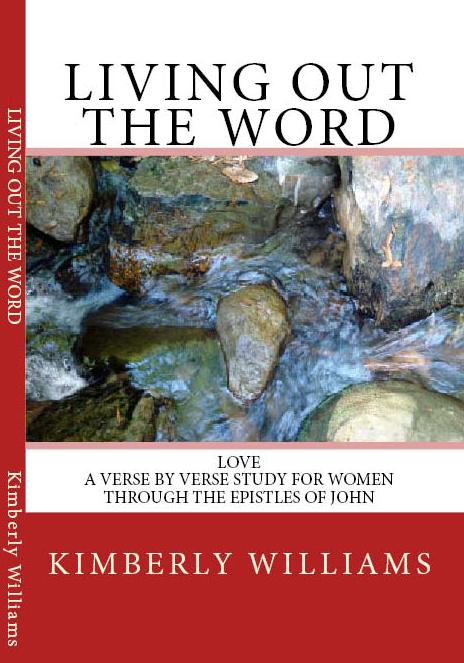
Most of you know that I have been working diligently to finish up my fourth book (and 3rd in the Living Out the Word series).  Lord willing, LOVE: a verse by verse study for women through the epistles of John will be completed by March 2012.  Please keep me in your prayers as I strive to meet this goal. 

The new website, www.livingouttheword.net,  is devoted just to the Living Out the Word series.  I would love for you to stop by and check it out!

Blessings,

Kimberly

The Most Dangerous Lie

 Lies, falsehoods, errors, deceit, dishonesty, fraud, deception – no matter what it is called, it is still the antithesis of truth.  It is also more prevalent than truth.  More taught than truth.  And more loved than truth.  And let’s not forget how exceedingly dangerous a lie is.  One would think that the further way from the truth a lie is the more of a beast it becomes.  But this is not necessarily so.  Others have said that the most dangerous lie is the one closest to the truth.  With this I would have to agree.  Judge for yourself, which poison is more deadly, the one clearly marked or the one masquerading as healing medicine?

There are a lot of lies masquerading as truth.  That is why believers are told in I John 4:1, “Beloved, believe not every spirit, but try the spirits whether they are of God: because many false prophets are gone out into the world.”

 Not every spirit is of God. The Bible speaks of evil, unclean, dumb, foul, and deaf spirits.  It tells of the spirit of infirmity, spirit of divination, spirit of bondage, spirit of the world, spirit that “worketh in the children of disobedience,” spirit of antichrist, and the spirit of error.  The children of Israel were warned of false prophets who do not follow after the Spirit of God but follow their own spirit.  Son of man, prophesy against the prophets of Israel that prophesy, and say thou unto them that prophesy out of their own hearts, Hear ye the word of the LORD; Thus saith the Lord GOD; Woe unto the foolish prophets, that follow their own spirit, and have seen nothing!” Ezekiel 13:2-3.

A false spirit produces false teachers that fabricate false doctrine. many false prophets are gone out into the world.”   Over and over in the New Testament we are warned of these men and their teaching.  See Matthew 7:15, Matthew 24:4-5, Matthew 24:23-24, Luke 21:8, Acts 20:29-30, Romans 16:18, 2 Corinthians 11:13, Galatians 1:9, Ephesians 4:14, Philippians 3:18-19, I Timothy 4:1, 2 Timothy 2:17-18, Titus 1:10-11, 2 Peter 2:1, 2 John 1:7, 10, Jude 1:4, and Revelations 2:2 just for starters.

We are not to believe them all but to try them.  To try the spirits means to test or prove them.  “Prove all things; hold fast that which is good,” 1 Thessalonians 5:21.  There are two ways to test a spirit.  The first is by the Word of God.  The believers in Berea were nobler than the ones in Thessalonica because they “searched the scriptures daily, whether those things were so,” Act 17:11. If a doctrine does not line up with Scripture it is wrong.  The Spirit of God will never contradict the Word of God.  This is very important.  Let me say that again, the Spirit of God will NEVER contradict the Word of God.   I heard a female preacher/pastor on the radio one day defending her “call” into the ministry.  Another pastor, disputing with her, kept bringing up the Scriptures.  Quoting Paul he would say that a woman was not to teach or usurp the authority of a man within the church.  This lady responded with the notion that we are led by the spirit and are not under the law.  At that point, the host of the program even erroneously contended that the ‘words in red’ are more important than Paul’s writings.”

Read Jesus’ words (in red).  Howbeit when he, the Spirit of truth, is come, he will guide you into all truth: for he shall not speak of himself; but whatsoever he shall hear, that shall he speak: and he will shew you things to come. He shall glorify me: for he shall receive of mine, and shall shew it unto you,” John 16:13-14.

To recognize truth we must understand that the Spirit will never supersede the written word.  Just as Christ came to do the will of the Father and glorify Him, the Spirit will point people to Christ and glorify Him.  John 1:1 tells us that Jesus is the Word of God.  Revelations 19:13 tells us that The Word of God is His very name.  We also know that all scripture is given by inspiration of God,” 2 Timothy 3:16.  To say that the Spirit would lead us or teach us something contrary to Jesus Christ (The Word) is untrue.  The Spirit did not call this woman to be a pastor because that contradicts the Word.  (Read I Timothy 2:11-12.)

So the first way to test if something is true is by the Word of God.  But Jesus said there was another way in which we can test the spirit of false prophets?  “Wherefore by their fruits ye shall know them,” Matthew 7:20.    You cannot separate a man’s personal life from his ministry.  Does his life line up with what he is teaching?  The same can be asked of women.  Friends, be careful when getting advice from others.  You need to make sure that what they say is first biblical and second that their life demonstrates good works.  “Who is a wise man and endued with knowledge among you? let him shew out of a good conversation his works with meekness of wisdom,” James 3:13.

If the Spirit of God dwells in you, by knowing the Word of God and examining fruits, you can test the spirits to see if they are truly of God. God has given the believer the spirit of discernment. “God hath revealed them unto us by his Spirit: for the Spirit searcheth all things, yea, the deep things of God.” 1 Corinthians 2:10.  Do not fall for lies that hinder your spiritual growth, there are many out there.  And remember, the most dangerous ones are the ones closest to the truth.

(Taken from Living Out the Word: Love, A verse by verse study for women through the Epistles of John by Kimberly Williams.  Coming soon – Spring 2012!)