State Testing, Standardization, and Godly Standards

With state testing approaching, I’ve had a lot of questions from homeschooling parents about how to prepare and the overall process.  I must say that I am hardly an expert on the subject.  My 15 year old took the Arkansas state test when he was in 3rd grade. After that we moved to a state that did not require state testing.  Now that we have moved back to Arkansas, my children are required to take the standardized tests.  So, we picked up some practice booklets this week.  We got them mostly so the children could practice.  After all, Abigail and Andrew have never “filled in bubbles”.   

When we talk about standardized testing, here is what I want Christian homeschooling parents to know.  If being “standardized” is conformity to a standard, then we need to decide as parents what standard we want our children conformed to.  I wrote an article for Homeschool Enrichment a couple of years ago called Whose Standards Do We Follow.  It is posted below.  I hope that as you are preparing your children for testing this year that it is done with much prayer and with God’s standards in mind.  Blessings!

Whose Standards Do We Follow?

“Mom, who is Oprah Winfrey?” my son asked one day sitting at the kitchen table.  The state we lived in required standardized testing for 3rd through 9th grade.  My son, then 8 years old, was reviewing a practice booklet when he asked the question.  After explaining to him that she was a TV celebrity he asked, “Why do I need to know that?”  With a smile in my heart I replied, “You don’t.”  Later that evening I showed the book to my husband and pointed out several points of concern.  We had come to the conclusion that since the tests were from a secular, humanist, and evolutionary point-of-view, our son would simply be at a disadvantage in taking them.   “Sweetheart, don’t worry about it.”  He said.  “After all, do we really want our children to be standardized?”

It is that very question that we have asked every year since.  As Christian parents do we want our children to be like the rest of the world?  Unfortunately, it is a very easy trap to fall into.  We have a vested interest in our children and want the best for them.  The question is, “What is best?”  Many would agree that if children excel in academics, are well rounded in their social development, are active in sports, can play a musical instrument, are learning a foreign language, score high on the ACT, get a scholarship into a good college, and go on to make a high-paying career for themselves that they are successful.  While the world would unquestionably view this as success, as a believer in Christ, these are not necessarily my standards.  The Apostle John wrote in 1 John 2:15-17 to “Love not the world, neither the things that are in the world. If any man love the world, the love of the Father is not in him. For all that is in the world, the lust of the flesh, and the lust of the eyes, and the pride of life, is not of the Father, but is of the world. And the world passeth away, and the lust thereof: but he that doeth the will of God abideth for ever.”  If we are not careful, our families will indulge in and love the things of this world. This kind of love is to our detriment, for there is a world system that we are not to love or cling to.  The world will pass away therefore the way we live and the standards we set for our children need to be with eternity in mind.  Otherwise, we have sold our children short, “For what is a man advantaged, if he gain the whole world, and lose himself, or be cast away?”(Luke 9:25)

Is it wrong to want our children to excel in academics?  Absolutely not!  But if academic excellence is the goal without the foundation of God and His Word then our priorities are misplaced.  “If ye then be risen with Christ, seek those things which are above, where Christ sitteth on the right hand of God. Set your affection on things above, not on things on the earth.” (Colossians 3:1- 2)  While I want my children to do well in their educational pursuit, I want to measure their success by God’s standards and not the worlds.  Everything that is passed through their minds need to be filtered by the Word of God.  When I taught my 5 year old subtraction my goal was not that he learned the simple mathematic fact of ten minus one equals nine.  My goal was much higher.  Instead, I took him to Luke Chapter 17 and showed him the story of Jesus healing the 10 lepers.  He learned that nine went away and one came back giving thanks to Christ and glory to God.  When we teach with a Biblical mindset, math becomes more than just a lesson.  It becomes an exercise in godliness.

My most important goal as a parent is to teach my children to love the Lord God with all their heart, soul, mind and strength, first and foremost!  Secondly, would be to love their neighbor as their self.   Jesus said that on these two commandments hang all the law and prophets. (Matthew 22:36-40)  I also want to teach them to work hard (Colossians 3:23), not to impress others with their intelligence or for self-centered achievements, but because in working hard we give God glory.  Everything we teach our children can point to God and His glory.  While these goals soar above all others and I fail miserably at times, in truth they are the only ones worth pursuing.  To see how this is practically applied let us look at a few of the core subjects that most children are taught.

Language   –   Whether your child is just learning phonics and how to read or he is diagramming sentences and writing papers, you can easily teach with an eternal perspective.  What is the goal in teaching my child to read?  The most obvious would be that he can read the Bible.  The Creator of the universe and of all that is seen and unseen has given His Word in written form so that we can know Him.  What better motive for teaching my child to read than that?  Why teach my child how to write, speak, and spell properly?  The main reason would be so that he can communicate the glorious gospel to those around him.   Any other achievement would be secondary.  Perhaps, in pursuing the English language your child wins a spelling bee or scores high on a test.  If so, give God the glory.  But do not let those things be your motivation.   The mastering of additional languages can point others to Christ as well.  Perhaps your family is learning Spanish for this reason alone.  Many hearts have been changed and lives given to Christ in foreign lands.  And whatsoever ye do in word or deed, do all in the name of the Lord Jesus, giving thanks to God and the Father by him. (Colossians 3:17)  “Whatsoever ye do” includes phonics, handwriting, spelling, speech, debate, foreign languages, and language composition.

Math  –  What does a Biblical standard verses a worldly standard look like in teaching mathematics?  We have already looked at teaching a small child using Bible stories.  What other incentives do we have for teaching our children math?  One very practical reason is so that our children will be good financial stewards.  My children might not use higher math such as calculus or trigonometry on a daily basis but they will need basic math skills to be able to balance a check book, pay bills, go to the grocery store, or run a business.  All of these things when well done lend to a good testimony for our Lord.   But it could be that our children have a natural gift for mathematics and are able to go on to use their advanced knowledge for the glory of God.  Sir Isaac Newton, mathematician and physicist, would be a wonderful example of this very thing.

Science  –  Biology, ecology, meteorology, geology, and all the other “ologies” are good things to learn.  It is good to know the periodic table and about the laws of the universe but does my child know the Maker of the universe?  Does my child look at a blade of grass or an animal and see God’s handiwork?  Have I taught my child to stand back and look at all of creation in awe and wonder?   Or am I teaching mere facts in order to pass a test and proceed onto the next course of study?  True science will always point us to God.  Louis Pasteur, Father of Microbiology, said it like this, “The more I study nature, the more I stand amazed at the work of the Creator.  Science brings men nearer to God.”

History  –  It would be impossible to teach all there is to know about history.  There is simply too much information.  If we are not careful this subject can become dull names, tedious dates, and boring facts.  However, if we look at history through the sovereignty of God it becomes His Story.    When we realize that nations rise and fall and that the hearts of kings are stirred by God Almighty our perspective on history changes.  What better opportunity to teach our children Biblical morals and values than to have them read about and study godly characters from the past like George Washington?  In studying history we can also teach the mistakes that mankind has made in the past so that our children and future generations are not doomed to repeat them.   We can learn about important moments in history like when Samuel Morse sent the first telegraph message, “What hath God wrought” taken from the Scriptures.  Or perhaps, in our studies of Italy, as we discover the Leaning Tower of Pisa we can use the opportunity to teach our children spiritual truths about building upon a solid foundation.

Bible  –  While most Christian home school families use a Bible curriculum, it is important to remember that even in studying Scripture we can have a worldly mindset.  Every motive should be examined.  If we only teach parables from the Bible without practical application, if we only teach the law of God without the grace and love of God, and if we only teach Scripture memorization without meditation, we come dangerously close to creating little Pharisees.  It is more important to me that my child loves the Word of God than that my child is able to give a dissertation on the missionary journeys of Paul.  While studying the Apostle’s life is important, if my child truly loves the Word of God he will enthusiastically learn as much as he can about the Bible.  If we develop a love for the Word of God in our children and teach them to diligently seek Him we have given our children a precious gift that can never be taken away.

Learning should be an everyday occurrence and it should not be divided up between secular and spiritual.  As a believer everything should be spiritual.  This happens when we incorporate the things of God into our daily studies and activities.  In doing so it changes not only how we teach but why we teach.  We are no longer just concerned with the outcome but now with the process and the application.  Let’s look at an example of teaching my daughter home economics.  Perhaps by the world’s standard she should learn how to cook, sew and take care of a baby.  But is that enough?  In addition to teaching her the fundamentals, by God’s standards I would teach her from Titus 2:4-5 to “be sober, to love their husbands, to love their children, to be discreet, chaste, keepers at home, good, obedient to their own husbands, that the word of God be not blasphemed.”  By the world’s standards it is good for boys to take a shop or woodworking class.  But the application of that would be that my sons learn “to study to be quiet, and to do your own business, and to work with your own hands, as we commanded you; That ye may walk honestly toward them that are without, and that ye may have lack of nothing.”(1Thessalonians 4:11-12)  I should teach them not only how to work with their hands but also how to be the sole-provider for their families (I Timothy 5:8).

So the question is, “By what standards will we choose to live by?”  As Christian parents we must keep in mind that we will be accountable for the education of our children not based on the world but on God and His Word.  In that knowledge there is great responsibility but also great peace.  Responsibility in that we will answer to God alone for how we teach and train our children.  Peace in that we are not bound by the world’s standards for our children.  Remember that academic excellence is a commendable goal but it must be properly laid with the correct foundation.   “For other foundation can no man lay than that is laid, which is Jesus Christ. Now if any man build upon this foundation gold, silver, precious stones, wood, hay, stubble; Every man’s work shall be made manifest: for the day shall declare it, because it shall be revealed by fire; and the fire shall try every man’s work of what sort it is. If any man’s work abide which he hath built thereupon, he shall receive a reward.” (1Co 3:11-14)  The builder (the Christian parent) needs to seek out the Architect himself (God) and use His own blueprints (the Scriptures).  The sure foundation is Jesus Christ and the gold, silver, and precious stones are those things that are of eternal value.  In the end nothing else will matter.  When the fiery trials of life come and when all our works are manifested, we want to know that what we have built into our children will last.  It is those things that we must pursue and by those standards that we must live by.

 Whose Standards Do We Follow by Kimberly Williams, Originally published in Homeschool Enrichment Magazine, Issue #44 March/April 2010 

 

Teaching Children to Give During the Holidays

  Last night my family did something we don’t usually do.  We sat down after dinner and watched a TV program together.  America’s Funniest Home Videos was on and we do love to laugh.  You know the show – someone falls off a roof, gets hit by a ball, or has a skiing accident.  Of course, my 9 year old asked a valid question last night.  He wanted to know, “Why do we laugh at people getting hurt?”  Good point, son, and one that should be addressed sometime.  But what really caught my attention were the videos that showed children getting their Christmas presents.  One was of a boy who got clothes for a present and stomped up to his room in anger.  Another one was of a teenage girl who thought she didn’t get the phone she wanted and her pouty reaction.  Parents gave one girl a fish tank for Christmas.  Apparently, the fish didn’t live and the girl reacted by shouting, “This is the worse Christmas ever!”  The videos are meant to be funny but my thoughts were that these children are unthankful, selfish, and rude to their parents.

If we are not careful we will play right into the natural inclination of children’s selfishness, especially at Christmas.  While I desire to give my children good things, at the same time I do not want them becoming self centered in the process.  One way we try to do this is by steering them away from creating a “Christmas wish list” and instead we have them create a list of what they would like to give to others.  My parents have been good at teaching their grandchildren that “it is more blessed to give than receive.”  Each year at Thanksgiving they give the children a gift of money for them to give away.   The children will take the money and buy presents to give away to someone in need or they will buy gifts for people in a nursing home.  This helps to create in their heart an attitude of giving.

This attitude should be taught all year long.  However, we should be ever diligent in teaching it during Christmas.  For the Christian, gift giving represents the greatest gift ever given – God giving the world His only begotten Son.  It is so easy to get caught up in the holiday bustle and forget the real reason for the season.  I remember talking to a young mother last year.  She stated that she was sick of Christmas.  All her children did was whine and complain about what they wanted that year.  And this was two weeks before Christmas!  I walked away from the conversation very sad.  This was a young girl in our church who professed Christ.

Philippians 2:4 tells us, “Look not every man on his own things, but every man also on the things of others.”  Christ gave His life for others and we are to follow in His example.  The reality is that we will never teach our children to give unless they see this portrayed in our own lives.  Like the saying goes, more is caught by children than taught.  If we are selfish and self centered during Christmas, our children will be as well.  But, if we live our lives in love as we are told in Romans 12:10, and “in honour preferring one another” our children will learn to do this as well.

Look around and pray as a family about opportunities to give this year.   Many people let their children pick a child from the Angel Tree or they will do Operation Shoe Box.  These are fun ways for the children to give.  On two different occasions we found out the ages of children in our local Baptist Children’s Home and bought them gifts.  You can also look for opportunities within your church.  Perhaps you could adopt a Missionary family and send them gifts.  Often times there are people in your own congregation who have no family and who would love to spend the holidays with your family.  Giving doesn’t always involve spending money.  Sometimes a homemade gift, card, or just your time mean more to people than anything else.  Consider the elderly this year.  There are many lonely and depressed people during the holidays that could use some love and encouragement.  What a great way to share the love of Christ.

We can buy our children toys that will be broke in a few weeks.  We can get them the latest fashions that will soon be outdated.  Or we can buy them gadgets and electronics, but in a few months there will be newer and better versions out there.  I’m not against giving gifts to my children (in fact, we already have them all bought), but why not give them something that will last.  Give them an opportunity to develop an attitude of giving, thankfulness, selflessness, and love for others.

“Remember the words of the Lord Jesus, how he said, It is more blessed to give than to receive.”  (Act 20:35)

Should Christians Vote for a Woman President?

As the 2012 election approaches there is a lot of talk about potential candidates.  Who will be the next United States president?   Will a woman make history by being elected?  Perhaps it is too early to decide.  However, it is not too early to discuss the possibility.  And more importantly, what biblical stand should Christian people take on the matter.  Does God’s Word address such issues?

God ordained three institutions upon this earth.  He ordained the family, the church, and government.   The Scriptures are clear about the hierarchy within the family.  The husband is the head of the family; the wife is to submit to him as unto the Lord; and the children are to honor and obey their parents. (Ephesians 5:33-6:3)  The Scriptures are clear about the hierarchy within the church.  I Timothy 2: 9-15 and I Corinthians 14:33-35 explains this clearly.  Men are to be the spiritual leaders not only within their home but also within the church.  I realize that even within Christian circles today that this is not taught.  However, the authority of the Scriptures still stands.  We can accept the truth or deny the truth, but we cannot change it.  So if God has established men to lead in the institution of the home and within the church.  Why then, would we think that God would not have a hierarchy within the institution of government? 

When tackling the subject of women in political leadership, often Christian’s will point to two particular passages in the Bible – Esther and Deborah.  Esther is the heroine of the Old Testament book named after her.  She was the young Jewish Queen of the Persian King Ahasuerus.  She was responsible for saving her people from mass slaughter.  Esther was placed in her position, “for such a time as this.” (Esther 4:14)  The account of Deborah is found in the book of Judges Chapter 4.  She was a prophetess who judged her people.  She was the only female judge of Israel.  Deborah led a successful attack against Jabin, the King of Canaan.

Those that contend that God is pleased with women in leadership often use these examples from history.  In looking at the story of Esther it is important to remember that she did not have a choice in the matter.  She was not seeking a position of political leadership.  She did not purposely forsake her family in order to become Queen.  She was not given an option.  Look at Deborah from Judges Chapter 4, many others will say.  God used her to lead the nation of Israel to great victory.  This is a convincing argument other than the fact that people forget to take the story in context.  When you look at the whole passage contextually the children of Israel “did evil in the sight of the Lord,” (Judges 4:1).  God was not pleased with them and put them in bondage.  It was a shame to the men of Israel for a woman to judge over them.  Isaiah 3:11-12 says, “Woe unto the wicked! it shall be ill with him: for the reward of his hands shall be given him. As for my people, children are their oppressors, and women rule over them. O my people, they which lead thee cause thee to err, and destroy the way of thy paths.”   There is a lot to this passage.  But simply put, God gave the wicked people what they wanted.  It could be that God, in His sovereignty, will allow a woman President.  Romans Chapter 13 tells us that there is no power but of God.  God Himself will place our next President.  But Christians must remember that sometimes God gives His people what they want, not what is best for them, (I Samuel Chapter 8).

 When sharing this view with a young lady, the other day, I was asked, “What if the vote comes down between an unrighteous man for President and a Christian woman?”  Wouldn’t we have to vote for a woman in this case?  Many believe that we must often choose the “lesser of two evils.”  The assumption is that God will not give His people the right option.  However, I believe that God always gives His people a way to make the right choice, (I Corinthians 10:13).  It was John Quincy Adams that said, “Always vote for principle, though you may vote alone, you may cherish the sweetest reflection that your vote is never lost.”  

 Whether we are speaking about the home, the church, or government, the issue has never been if women were capable of leading.  Of course women are capable of leading.  There are many talented women who have a great gift of administration.  The issue has never been if they were smart enough.  There are many women who are well educated and skilled above even men.   The issue has never been if they could lead.  It is true that there are women that could lead very well.  But these are not the issues.  The biblical issue is whether women should lead.  Christian people can rationalize woman leading in the home, in the churches and within our government.  However, they cannot from the Scriptures establish that this is God will.  He did not design women to lead in any of the institutions He has ordained.  The fictitious principle is just not there.  The modern feminist movement has caused many Christian’s to err.  I pray that we will lay aside this fallacy and come back to Scripture.  May the pure Words of God be our standard for our beliefs.

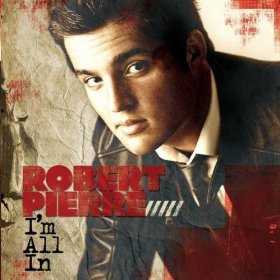
I’m All In (CD Give-A-Way)

 Those of you who have followed my writings know how I feel about music.  God designed it to stir your soul.  Music will either stir your soul toward God or away from Him.  This week as my family and I have listened to Robert Pierre’s newest album, I’m All In, our hearts have been stirred toward God!

 Robert is a very talented young man. In addition to writing, recording, and playing on a summer tour, he also leads regular Sunday morning worship at his church.  And he’s done it all as a high school senior.  I’m All In is his third studio album and is set to release tomorrow (July 26th).

 I’m All In is a collection of enthusiastic songs filled with the deep truths of God.  For example, my favorite on the album is Who R U.  There is a theological term found in the Scriptures known as antithetical parallelism.  God’s Word is full of antithesis.  “For the wages of sin is death; but the gift of God is eternal life” Romans 6:23.  “Hatred stirreth up strifes: but love covereth all sins” Proverbs 10:12.  “Depart from evil, and do good” Psalm 37:27.  All through Scripture opposites are clearly revealed:  life and death, love and hate, good and evil, saved and unsaved, narrow way and broad way, blessed and cursed, wise and foolish, fruitful and withered, etc.  Robert expounds of this concept throughout his song.  He sings,

 You’re either hot or your cold – either yes or your no – will you stay or will you run – who will you become – you’re either in or you’re out – either soft or your loud – when He calls for His own – I want to be known                                                                                               

My husband says this is great “driving music”.  His favorite song is “Stranger In This Land.”

This world will try to shut me down – Push and shove me to the ground – but I’ve been covered by the blood of Christ – I am His and He is mine – I may be hated but this ain’t my town – persecuted constantly beat down – but there’s a joy in the suffering – cause He is my identity – I’m not of this world – I’m a stranger in this land

 I am giving away a copy of Robert Pierre’s I’m All In to one of my readers.  Just leave a comment and one week from the release date (Tuesday, August 2nd) I will draw a winner and have a copy sent to you.  Tell your friends and increase your chance to win.  Leave separate comments for each posting on social media (face book, twitter, blogs, etc) for additional entries.

 Disclaimer:   I received “I’m All In” to review in exchange for an honest product review.   I do not receive any other form of compensation for the reviews posted on this blog.

The Wrong Question

 Many times we go through life asking the wrong questions. I see this often in our culture. The liberals will get people to question whether a woman should have a right to choose an abortion (Pro-choice). That’s the wrong question. The correct question is whether our society should allow women to murder innocent babies (Pro-Death). People will ask if Christians should be allowed to pray in government ran schools. Again, that is the wrong question. The question is should we allow an ungodly government to train and educate our Christian children. When we begin to ask the right questions, all of a sudden we begin to get the right answers.

Have you ever heard anyone say, “Why do bad things happen to good people?” That is the wrong question. In Luke 18 a rich young ruler came to Jesus saying, “Good Master, what shall I do to inherit eternal life?” Do you remember Jesus’ response? “And Jesus said unto him, Why callest thou me good? none is good, save one, that is, God,”(Luke 18:19). There is none good but God. So, when we ask, “Why do bad things happen to good people?” we are asking the wrong question. The correct question should be, “Why do good things happen at all?”

 Tuesday night our family attended a youth revival. The young man preaching is a friend of our family. He addressed the same thought of asking the wrong questions. The point he made was that many times Christians ask, “Is this a sin?” We will question…

Is it a sin to drink?

Is it a sin to watch this movie?

Is it a sin to say this?

Is it a sin to date this person?

Is it a sin to (fill in the blank)?

Again, this is the wrong question. Instead of asking if something is a sin what we should be asking is, “Is this holy?” You can ineffectively debate whether drinking is a sin but when you ask the correct question of “Is drinking holy?” you get a clearer answer. What about asking if this movie we are about to watch is holy? Is what I’m about to say holy? Is this relationship holy? Is what I am doing holy? And so on…

With the correct question, all of a sudden the perspective changes. It is easy to justify certain behavior when we approach it from a, “Is this really a sin?” attitude. However, if we approach our lifestyle, our conduct, our words, and our inner motives from the thought of, “Is this holy?” it becomes impossible to justify those questionable activities. Children of God are called to examine their life (2 Corinthians 13:5). We should ask the Lord to search our hearts (Psalm139:23). And we need to be seeking out wisdom by asking the right questions (James 1:5).

“Wherefore gird up the loins of your mind, be sober, and hope to the end for the grace that is to be brought unto you at the revelation of Jesus Christ; As obedient children, not fashioning yourselves according to the former lusts in your ignorance: But as he which hath called you is holy, so be ye holy in all manner of conversation; Because it is written, Be ye holy; for I am holy,” (1Peter 1:13-16).

Homeschooling – An Offensive Lifestyle!

Take a journey, back in time, to America a few generations. How easy would it be to offend a person thirty, forty, or fifty years ago? The older generation voices of an era when the majority of people would not only be offended to hear a crude word spoken but would not even tolerate it. Not too many years ago people would be offended to see open sin paraded around in public. At one time people would be offended to see children speaking disrespectfully to an elder. Our country and flag was greatly honored and to show disrespect to either was offensive. And the thought of someone openly condemning Christianity in America was unthinkable. The generations of the past were easily offended by insulting behaviors, filthy language, open immortality, anti-patriotism, and a blatant disregard for spiritual matters. Oh, how the times have changed! It seems as though this deliberate decay of our culture is not only tolerated but joyfully embraced. And yet, through the eyes of the world, there are still plenty of offenses which must not be tolerated. Today the offenses come in the form of Christianity, absolute truth, holy living, the name of Jesus Christ, submission to authority, and of course, the Christian homeschool movement.

I remember the first time I realized that there were people who were offended by our family’s lifestyle. It was the summer after our first year of homeschooling. I was sitting with a friend in a ladies Bible study class, who had introduced our family to home education. We were discussing the benefits and joys of the year. I had commented that I was so thankful the Lord opened our eyes to our responsibility as parents to educate our children. During the discussion, others joined in asking questions. After the class was over a lady approached me who had been very offended that we had so openly discussed homeschooling as a valid option for Christian parents. She had been a public school teacher for 20 years and in her own words, “had never seen anything taught to the detriment of Christians in public school.” She was adamant in that public schools were safe and unmistakably the best option for all Christians. Although I was new to homeschooling and could not clearly articulate my position, it had not been that long ago that I was in public schools myself. I distinctively remember all the evil that I was exposed to at an early age from teachers and peers alike, not to mention the anti-God philosophy.

That was 8 years ago. While it was the first time that I have viewed such opposition to home education, it certainly was not the last. There once was a lady in our church who showed apparent disdain toward our family. I remember asking my husband one day after services, “What have I done to her? She obviously does not like me. I’ve gone out of the way to be kind and friendly to her and her family.” My husband, who knew how hard I had been trying said, “Sweetheart, it is nothing you have done. Our lifestyle is offensive.” Over the years we have come to realize that the choices we have made regarding our family is contrary to the world. At its foundation we believe that Scripture teaches a very distinct way of living as a child of God. As a woman, I believe that part of my high calling is to be a help meet to my husband (Genesis 2:18), to live in subjection to him (I Peter 3:5), and to be a keeper at home (Titus 2:5). We believe that the husband, as the head of the family, will be responsible to God for the education and upbringing of the children (Ephesians 6:4, Proverbs 4:1-7). He is to oversee all their learning about God and His world. And daily, he is to teach God’s Word to his family (Deuteronomy 6:5-9). As his help meet, I play a major role in the daily teaching of our children. At the heart of all we do lies biblical truth. Therefore, we really should not be surprised when the world is offended. Jesus said in John 15:18-19, “If the world hate you, ye know that it hated me before it hated you. If ye were of the world, the world would love his own: but because ye are not of the world, but I have chosen you out of the world, therefore the world hateth you.”

While we expect this opposition from the world, it is disheartening when it comes from other Christians. One could argue that there are those who simply claim the title yet bear no fruit of righteousness. Many times it is these types of people who are antagonistic to those trying to live their life according to the Bible. However, that is not always the case. Many simply have never been taught the truth. For several generations, our society has believed that families should pursue the American dream at all cost. In this pursuit, the foundation of the biblical family has been cracked. Sadly, many churches have lacked in biblical teaching necessary to rebuild the family. So now, when a family pushes against the flow of society, by holding to their convictions from the Word of God, they often experience a backlash. Perhaps, you have experienced such criticism from family, friends, church members, or even pastors. It seems that a few months cannot pass without hearing a testimony from a family to this extent. They are homeschooling because of biblical conviction and due to the amount of criticism they receive one would think that they have purposely set out to destroy the lives of their children.

  • “You shelter your children too much.”
  • “Your children will rebel.”
  •  “Your children will not know how to deal with the ‘real’ world!”

I, and many others, have heard these comments before. Dear friend, do not let the world dictate to you lies from the enemy. It is a good thing to shelter your children. Gods shelters us and I am so glad He does! When the storms of life come, His children run into His arms of safety. As far as children rebelling, perhaps they will. But I know that children will often do exactly what they are trained to do. Parents have believed the lie that all children will always rebel against the teaching of their parents. When a parent believes this and expects his child to rebel he will not be disappointed. That child will rebel. Parents should be realistic enough to know that children might rebel but should never expect them to rebel. My husband and I will bring our children up in the way they should go and hold on to the promise that they will not depart from it. What about our children knowing how to deal with the “real” world? Let me be very clear. The objective in Christian homeschooling is not teaching children how to “deal with the real world.” I do not want to teach my children how to merely survive this life. As believers in Christ we are called to be overcomers! “For whatsoever is born of God overcometh the world: and this is the victory that overcometh the world, even our faith,” (1John 5:4). As children of God, not only do we overcome this world but we overcome the wicked one (I John 2:13-14). We overcome his servants (I John 4:4). We overcome sin and death (I Corinthians 15:54-57). And we overcome evil (Romans 12:21). This is what we desire to teach our children. “You are an overcomer!”

Dear homeschooling family, do not be discouraged when you face opposition. Do not be surprised by the world’s criticism. As you probably have learned by now, one does not have to be on the front lines of the homeschool movement to be attacked. You do not have to be publicly declaring the truths found in Scripture from every mountain top to offend the world. All you have to do is live your life quietly and simply in holiness. Raising your family according to God’s standards is enough to have the world hate you. Your very lifestyle is condemning to those around you. Consider the story of Noah. “By faith Noah, being warned of God of things not seen as yet, moved with fear, prepared an ark to the saving of his house; by the which he condemned the world, and became heir of the righteousness which is by faith,” (Hebrews 11:7). I have heard this story my whole life. I have been taught that Noah, being a preacher of righteousness (2 Peter 2:5), preached to the world the coming judgment of God. In my mind I always assumed that it was his preaching that condemned the world. But this passage in Hebrews does not tell us that the world was condemned by his preaching, but by his life. Noah moved with fear, prepared an ark to save his family and by that he condemned the world. It was his obedience to God that condemned the wicked.

Now, move forward a few thousand years. Consider a faithful father called of God to lead his family. He reads in the Bible of the coming judgment. He sees the warnings from his Heavenly Father. He is moved with fear and works hard to build an ark of safety for his family. He rejects this world and does that which is necessary to save his house. He toils and labors to teach and train his children the ways of the Lord. And in doing it all, he condemns the world around him.  But unlike Noah, who knew only his family would be saved (Genesis 6:17-18), we are not alone. There are many other families who are striving to follow the Lord. There are many fathers who take their God-given responsibility seriously and seek to save their homes from worldly destruction. There are many mothers who are coming along side and fulfilling their God-given role. There are many children who are being brought up in the nurture and admonition of the Lord. There are families who still stand strong. Do not give up. Do not be discouraged. Know that your work will not be in vain! “That ye may be blameless and harmless, the sons of God, without rebuke, in the midst of a crooked and perverse nation, among whom ye shine as lights in the world; Holding forth the word of life; that I may rejoice in the day of Christ, that I have not run in vain, neither laboured in vain,” (Philippians 2:15-16).

(Clipart courtesy FCIT, http://etc.usf.edu/clipart)