Church: The Body of Christ

Imagine an athlete without a team, a ship without water, a performer without an audience, a bee without a hive, or a soldier without an army. Each analogy paints a sad picture of isolation, where there is a lack of support, shared purpose, and growth. Now try to imagine a body without arms, legs, or eyes. It becomes fundamentally incomplete and deficient in its capacity to function as created.

The same can be said for a Christian without a church. Something is lacking. Can you be a child of God and not be involved in a local church? Sure. But can you be following the will of God, growing in your walk, supported by others, and living with purpose outside a local body of believers? It is very unlikely. While salvation is personal, the Christian life is not. The Church is imperative and being involved in it is as necessary to the child of God as having a family is to a baby.

Unfortunately, too many people see church as either an organization run by others, a beautiful building to use for weddings, funerals, and events, or a place to attend over the weekend. But this is not the image of the church we see in scripture. The word church (ekklesia) means a called-out assembly or congregation.   In fact, in older translations, like the Tyndale English Bible, you cannot even find the word church.  The word ekklesia is correctly translated as congregation or assembly. Church, in its correct context, is a local, visible, and assembled group of believers who have coveted together.

As the Apostle Paul writes to various congregations in the New Testament, he uses the analogy of a body with each of them. The church at Corinth is remined  that they are a body that works together. “But now are they many members, yet but one body. And the eye cannot say unto the hand, I have no need of thee: nor again the head to the feet, I have no need of you. And whether one member suffer, all the members suffer with it; or one member be honoured, all the members rejoice with it. Now ye are the body of Christ, and members in particular,”  1Corinthians 12:20-21, 26-27.

To the church at Ephesus he says that Christ, “hath put all things under his feet, and gave him to be the head over all things to the church, Which is his body, the fulness of him that filleth all in all,” Ephesians 1:22-23. “From whom the whole body fitly joined together and compacted by that which every joint supplieth, according to the effectual working in the measure of every part, maketh increase of the body unto the edifying of itself in love,” Ephesians 4:16.

The Christians in Rome are told, “So we, being many, are one body in Christ, and every one members one of another,” Romans 12:5.

Paul tells the church in Colossae that Jesus, is the head of the body, the church: who is the beginning, the firstborn from the dead; that in all things he might have the preeminence,” Colossians 1:18.

The church will never be perfect. In the same way that a body can’t be perfect because it is perfectly flawed. But, each body is fearfully and wonderfully made by its Creator, as is the church. A healthy church, with sound doctrine, pours into people, welcomes and loves one another as family, invests in discipleship and spiritual growth, and prays and fellowships together. The church isn’t an organization for casual gatherings, but an organism with members who are committed to walk in this life together.

How important is your hand? What about your foot or big toe? Would you be willing to give up your eyes or ears? Let me be raw and transparent. This is why it hurts so much when believers leave a church. When someone decides it’s not enough, that the grass must be greener elsewhere, or that they can simply walk away, it leaves a painful gap and absence. For the body, it’s like losing an arm.

However, we must never lose sight of the beauty of this fractured body, whose head is Jesus. Yes, the body is made up of people, and people have a tendency to hurt others. That is the risk with genuine love. It costs. No one understands this more than Christ. Yet, despite it all, Christ designed the body to be healthy, lacking nothing, and dependent upon Him. He sustains, guides, and invigorates the body. He unites the body under His leadership. And every part has a job to do. Believers who are part of a body should cherish it with the same devotion we reserve for Christ. We are called to nourish, protect, strengthen, and care for our church, as we would our own physical body. And for those outside a local, visible, and assembled fellowship of the faithful, let me encourage you to get plugged in. The body needs you. And you need a healthy body because it is a lifeline for spiritual growth.
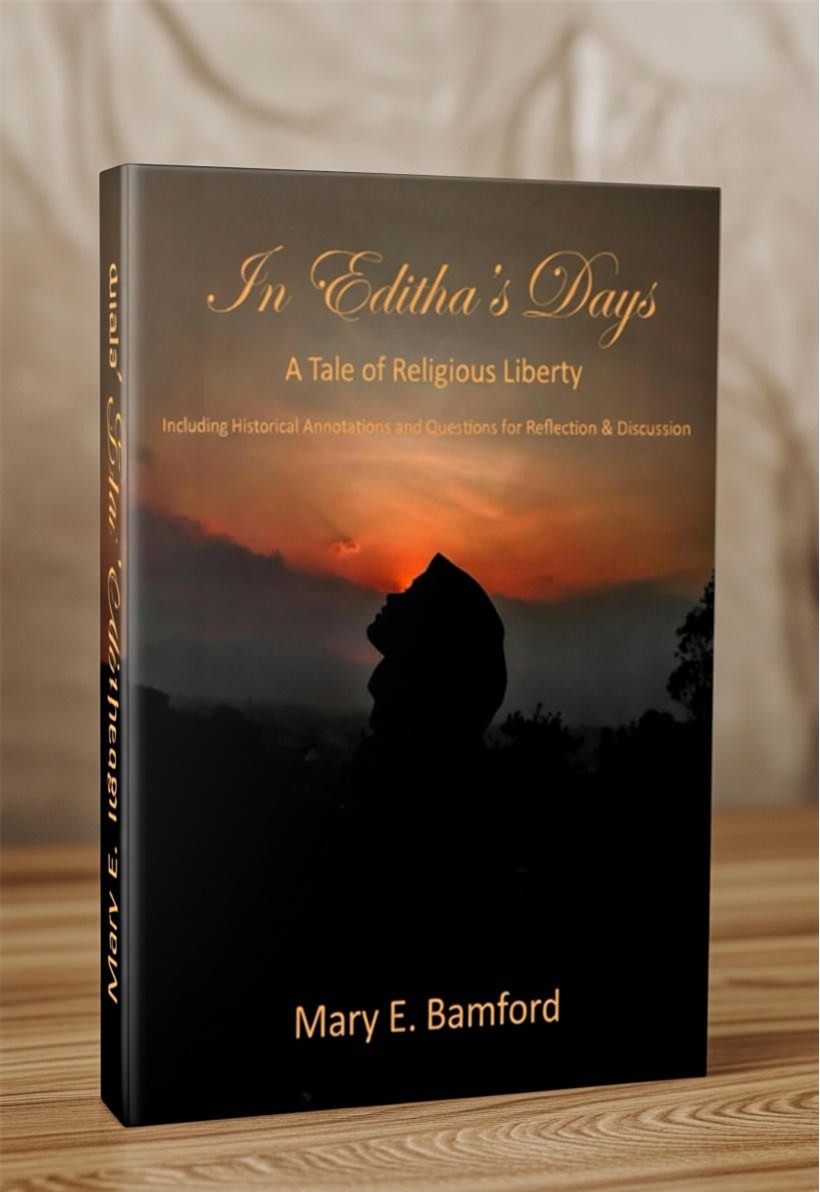
In Editha’s Days: A Tale of Religious Liberty

What does faith in Jesus Christ cost you? Paul told Timothy that all who live godly will suffer persecution. (2 Timothy 3:12) This is a reality that very few in America have yet to see. I thank God that we have religious liberty, yet it didn’t come without cost, and it won’t continue without sacrifice. Open Doors estimates that more than 380 million Christians currently suffer high levels of persecution. It is deadly to be a Christian in countries like Nigeria, North Korea, India, China, Pakistan, and more. Yet, people still put their faith in Christ. They still gather with the brethren. They still read their hidden Bibles. Even when it costs everything.

Albert Barnes said, “It has become a settled principle that nothing good and true can be destroyed by persecution, but that the effect ultimately is to establish more firmly, and to spread more widely, that which it was designed to overthrow. It has long since passed into a proverb that the blood of the martyrs is the seed of the church.”

Years ago, my husband handed me an old historical fiction book, written in 1894, called In Editha’s Days. I read it and wept. The story centers on young Editha, whose faith is tested amid widespread persecution, betrayals, and exiles. Grounded in Anabaptist convictions, the narrative explores the power of God’s Word in championing freedom of conscience, religious liberty, and the right to read Scriptures and worship without compulsion. The Anabaptists’ history is one of profound conviction, courage, and remarkable resilience in the face of relentless persecution. Their refusal to conform to the Catholic church led to suspicion, hostility, and violence. In Editha’s Days blends heart-pounding adventure with profound spiritual depth, featuring midnight escapes across misty moors, hidden prayer gatherings, and the loss of loved ones to the flames of intolerance.

As a labor of love, my husband and I poured our hearts into recreating a fully annotated edition of this captivating 1894 novel. We invite you to step into Editha’s world with us in honor of those who sacrificed all for religious liberty.

Get your copy today at Amazon. http://www.amazon.com/dp/B0G37L685C

Salvation is Personal: The Christian Life is Not

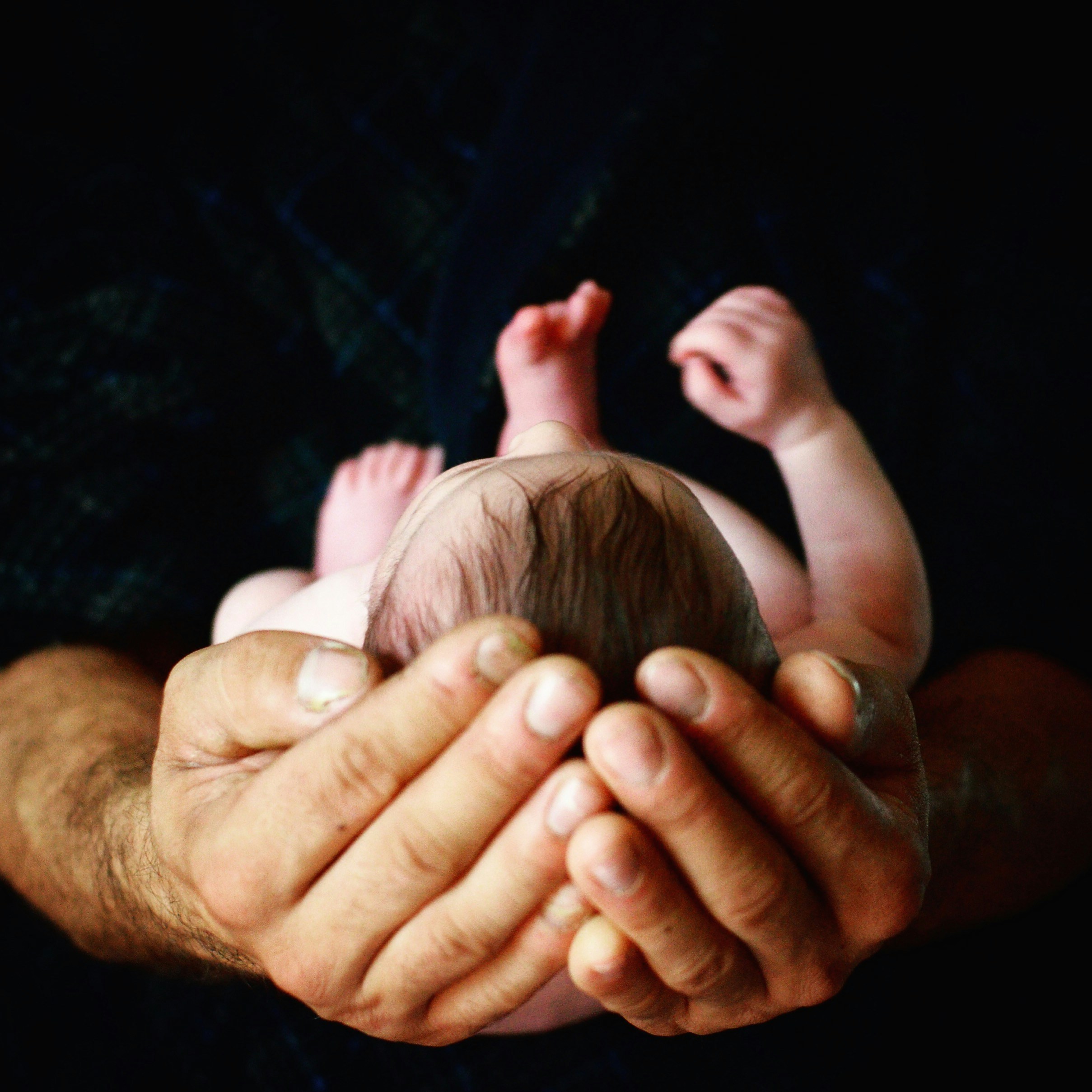
In a few days, my third grandbaby will be born. When he makes his anticipated entrance into this world, he will be placed in the nurturing arms of his mother. He will be held by his father and surrounded by loving siblings, grandparents, aunts, uncles, and cousins. He will be well loved, cared for, fed, and protected. This is by God’s design. When we are born into the world, we are born into a family.

The day we are born is significant. Most celebrate it each year. Yet, Christians understand that their physical birth is only their first birth. Every Christian has a spiritual birth. Jesus said to Nicodemus, “I say unto thee, except a man be born again, he cannot see the kingdom of God,” John 3:3. This new birth changes everything. Old things have passed away; all things have become new. Stony hearts are replaced with hearts of flesh. And where we were once children of wrath, the new birth makes us children of God, granting us eternal life with Him.

When we are born again, we should also be joined to a family of believers.  In this family, we are fed by elders (1 Peter 5:2), and the older teach the younger (Titus 2).  The strong in the faith help restore those overtaken in faults (Galatians 6:1).  The brethren lovingly exhort and warn the unruly (I Thessalonians 5:14).  We encourage one another daily so that sin will not harden hearts (Hebrews 3:12-13).  And we love those in sin enough to have compassion and make a difference in their life.  Jude 22-23 says, “And of some have compassion, making a difference: And others save with fear, pulling them out of the fire; hating even the garment spotted by the flesh.”

The idea of experiencing salvation without belonging to a local church is foreign in the New Testament. When individuals repented and believed in Christ, they were baptized and added to the church (Acts 2:41, 47; 16:5). They did not live out a private commitment to Christ. They joined formally with other believers in a local assembly and devoted themselves to the apostles’ teaching, fellowship, the breaking of bread, and prayer (Acts 2:42).

It is also important to note that the New Testament epistles were written to churches, not individuals. In them, we read about the significance of one another. The scriptures call us to love one another, honor one another, edify one another, admonish one another, care for one another, serve one another, restore one another, bear one another’s burdens, and be kind, tenderhearted, and forgiving toward one another.  We are to teach one another, comfort one another, exhort one another, and consider one another.  The Bible says we are to confess our sins to one another, have compassion with one another, be hospitable to one another, minister to one another, and fellowship with one another.[i] It is easy to see a theme here.

Salvation is personal, but the Christian life is not. Just as children who are orphaned, abandoned, and left to themselves can face harm or failure to thrive, so can children of God without a family. God designed us for accountability.  We need each other.  It was never intended for the child of God to be an island unto themselves.  I can’t imagine my grandson being born and left to himself without love, care, and protection. I can’t imagine him not having nourishment or his needs provided for.  Every child born needs and deserves a nurturing family to thrive. In the same way, every born-again child of God needs to be a part of a family, the local church.


[i] John 13:34, Romans 12:10, Romans 14:19, Romans 15:14, I Corinthians 12:25, Galatians 5:13, Galatians 6:1-2, Ephesians 4:32, Colossians 3:16, I Thessalonians 4:18, Hebrews 3:13, Hebrews 10:24, James 5:16, I Peter 3:8, I Peter 4:9-10, I John 1:7

Hating, Losing & Fighting: The Key to a Strong Marriage

My husband and I just celebrated our 32nd wedding anniversary. It’s been an exciting and glorious journey that began when we were just young kids. We’ve grown up together not only in age, but also in our Christian walk. We’ve raised 3 children and walked, hand-in-hand, through this life leaning on the Lord. Our marriage has been filled with laughter, tears, joy, pain, dreams, disaster, anticipation over the future, and fear of the unknown. At times it was too easy to be true and at other times it was harder than we thought we could bear. We learned early that fleshing out “two becoming one” was sometimes messy. We recognize that the sin nature we all have, along with living in this dark world, often makes marriage difficult. It’s not easy and having a God-honoring marriage is even harder.

If you and your spouse strive to live in a way that honors God, be prepared for a spiritual attack. Biblical marriage points people toward God. He ordained marriage. It is a picture and witness to this world of Christ and His Church (Ephesians 5:31-32). It is good and holy. And Satan hates everything about it. He wishes to destroy your marriage (along with your life, testimony, and family). We need to be watchful because our adversary, the devil, is a roaring lion, walking about seeking people to devour (1 Peter 5:8). He often uses the troubles of this world to divide husband and wife. He’s crafty and knows how to tear couples apart. He would love nothing more than for you to give up on each other, throw in the towel, and say that marriage is too hard.

The enemy is against us; the world is against us; and our own weak flesh battles against us. It is tempting to live in defeat. But, if you are a child of God, in Christ you are victorious! He has already overcome the enemy (Revelation 20:10). Those that are born of God have overcome the world (1 John 5:4). And even our flesh has been defeated (Romans 6:6). We can walk from victory unto victory if we choose.

My husband and I have seen our share of trials and troubles over the past 32 years. Through it all, we’ve grown closer to Jesus and each other. Our love is deeper and stronger with each trial. And we’ve learned the important aspect of hating, losing, and fighting in our marriage.  That’s right, you didn’t misread this.

To be victorious you must first learn how to hate. Did you know that love and hate go hand in hand? If you love children, then you will hate seeing children abused or murdered in the womb. If you love freedom, then you will hate bondage and slavery. If you love God, then you will hate the things that are against God. To have a strong, godly marriage you must hate how the world has tried to distort marriage. You must hate divorce. You must hate the things that tear marriage apart and you must both stand on that conviction when marriage gets hard.

You also must learn how to lose. I know, we live in a win-at-all-cost society, but a couple who lives victoriously will lose. They will lose their pride. They will lose their selfishness. And they will lose all things that try to pull them away from God and each other.

And finally, you need to fight! When troubles come, and life gets hard, our eyes often become fixed on our problems. Words get spoken in haste and fighting begins. It may even seem that your spouse is the enemy. But, dear Christian, our fight is not against flesh and blood, but against “principalities, against powers, against the rulers of the darkness of this world, against spiritual wickedness in high places” (Ephesians 6:12). Don’t fight each other. Work together. Build your marriage on the foundation of Christ. Position yourselves at the door of your home and press back against the darkness of this world. Fight the enemy with the Word of God. Stand with conviction, be committed to the cause, and take courage, dear saints. When life gets hard, remember that the battle is the Lord’s. 

Find out more about having a biblical, God-honoring marriage from Dana & Kimberly’s book The Eden Concept: Marriage God’s Way athttps://www.amazon.com/dp/1983938343

I Can’t Afford It