Church: The Body of Christ

Imagine an athlete without a team, a ship without water, a performer without an audience, a bee without a hive, or a soldier without an army. Each analogy paints a sad picture of isolation, where there is a lack of support, shared purpose, and growth. Now try to imagine a body without arms, legs, or eyes. It becomes fundamentally incomplete and deficient in its capacity to function as created.

The same can be said for a Christian without a church. Something is lacking. Can you be a child of God and not be involved in a local church? Sure. But can you be following the will of God, growing in your walk, supported by others, and living with purpose outside a local body of believers? It is very unlikely. While salvation is personal, the Christian life is not. The Church is imperative and being involved in it is as necessary to the child of God as having a family is to a baby.

Unfortunately, too many people see church as either an organization run by others, a beautiful building to use for weddings, funerals, and events, or a place to attend over the weekend. But this is not the image of the church we see in scripture. The word church (ekklesia) means a called-out assembly or congregation.   In fact, in older translations, like the Tyndale English Bible, you cannot even find the word church.  The word ekklesia is correctly translated as congregation or assembly. Church, in its correct context, is a local, visible, and assembled group of believers who have coveted together.

As the Apostle Paul writes to various congregations in the New Testament, he uses the analogy of a body with each of them. The church at Corinth is remined  that they are a body that works together. “But now are they many members, yet but one body. And the eye cannot say unto the hand, I have no need of thee: nor again the head to the feet, I have no need of you. And whether one member suffer, all the members suffer with it; or one member be honoured, all the members rejoice with it. Now ye are the body of Christ, and members in particular,”  1Corinthians 12:20-21, 26-27.

To the church at Ephesus he says that Christ, “hath put all things under his feet, and gave him to be the head over all things to the church, Which is his body, the fulness of him that filleth all in all,” Ephesians 1:22-23. “From whom the whole body fitly joined together and compacted by that which every joint supplieth, according to the effectual working in the measure of every part, maketh increase of the body unto the edifying of itself in love,” Ephesians 4:16.

The Christians in Rome are told, “So we, being many, are one body in Christ, and every one members one of another,” Romans 12:5.

Paul tells the church in Colossae that Jesus, is the head of the body, the church: who is the beginning, the firstborn from the dead; that in all things he might have the preeminence,” Colossians 1:18.

The church will never be perfect. In the same way that a body can’t be perfect because it is perfectly flawed. But, each body is fearfully and wonderfully made by its Creator, as is the church. A healthy church, with sound doctrine, pours into people, welcomes and loves one another as family, invests in discipleship and spiritual growth, and prays and fellowships together. The church isn’t an organization for casual gatherings, but an organism with members who are committed to walk in this life together.

How important is your hand? What about your foot or big toe? Would you be willing to give up your eyes or ears? Let me be raw and transparent. This is why it hurts so much when believers leave a church. When someone decides it’s not enough, that the grass must be greener elsewhere, or that they can simply walk away, it leaves a painful gap and absence. For the body, it’s like losing an arm.

However, we must never lose sight of the beauty of this fractured body, whose head is Jesus. Yes, the body is made up of people, and people have a tendency to hurt others. That is the risk with genuine love. It costs. No one understands this more than Christ. Yet, despite it all, Christ designed the body to be healthy, lacking nothing, and dependent upon Him. He sustains, guides, and invigorates the body. He unites the body under His leadership. And every part has a job to do. Believers who are part of a body should cherish it with the same devotion we reserve for Christ. We are called to nourish, protect, strengthen, and care for our church, as we would our own physical body. And for those outside a local, visible, and assembled fellowship of the faithful, let me encourage you to get plugged in. The body needs you. And you need a healthy body because it is a lifeline for spiritual growth.
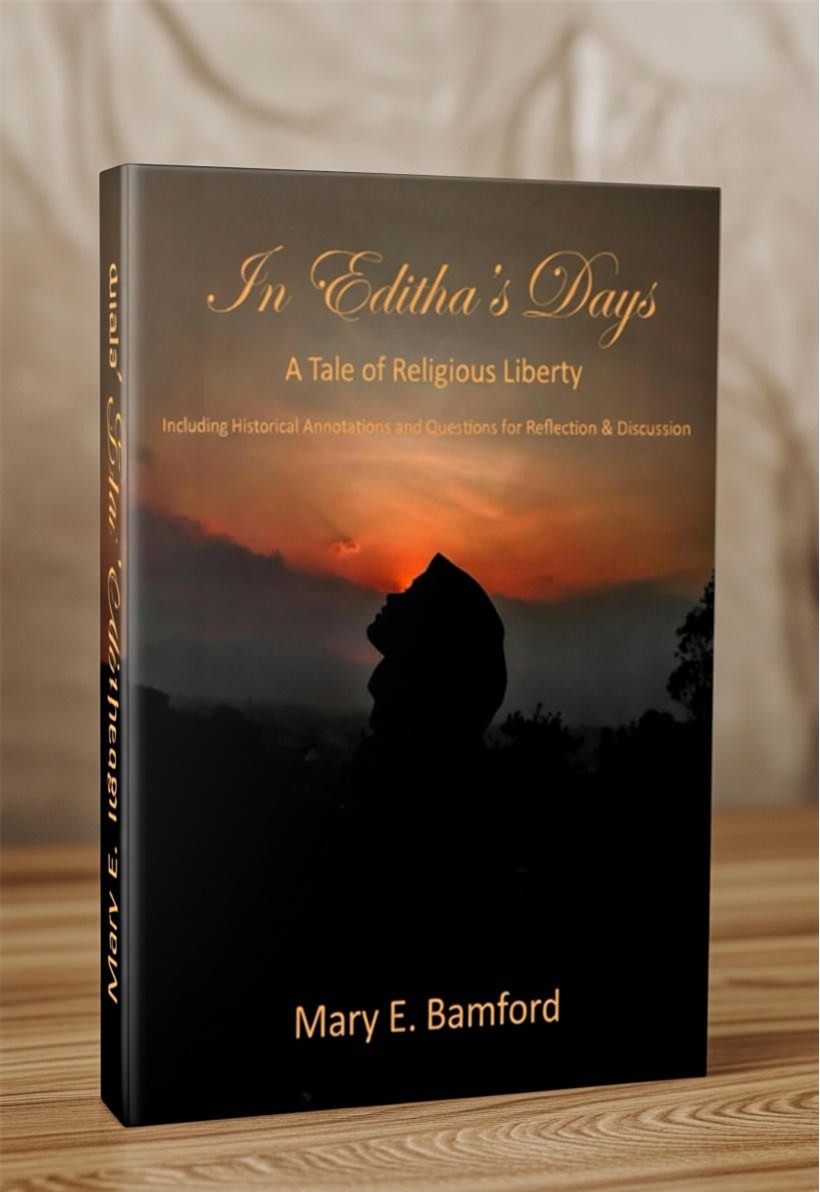

In Editha’s Days: A Tale of Religious Liberty

What does faith in Jesus Christ cost you? Paul told Timothy that all who live godly will suffer persecution. (2 Timothy 3:12) This is a reality that very few in America have yet to see. I thank God that we have religious liberty, yet it didn’t come without cost, and it won’t continue without sacrifice. Open Doors estimates that more than 380 million Christians currently suffer high levels of persecution. It is deadly to be a Christian in countries like Nigeria, North Korea, India, China, Pakistan, and more. Yet, people still put their faith in Christ. They still gather with the brethren. They still read their hidden Bibles. Even when it costs everything.

Albert Barnes said, “It has become a settled principle that nothing good and true can be destroyed by persecution, but that the effect ultimately is to establish more firmly, and to spread more widely, that which it was designed to overthrow. It has long since passed into a proverb that the blood of the martyrs is the seed of the church.”

Years ago, my husband handed me an old historical fiction book, written in 1894, called In Editha’s Days. I read it and wept. The story centers on young Editha, whose faith is tested amid widespread persecution, betrayals, and exiles. Grounded in Anabaptist convictions, the narrative explores the power of God’s Word in championing freedom of conscience, religious liberty, and the right to read Scriptures and worship without compulsion. The Anabaptists’ history is one of profound conviction, courage, and remarkable resilience in the face of relentless persecution. Their refusal to conform to the Catholic church led to suspicion, hostility, and violence. In Editha’s Days blends heart-pounding adventure with profound spiritual depth, featuring midnight escapes across misty moors, hidden prayer gatherings, and the loss of loved ones to the flames of intolerance.

As a labor of love, my husband and I poured our hearts into recreating a fully annotated edition of this captivating 1894 novel. We invite you to step into Editha’s world with us in honor of those who sacrificed all for religious liberty.

Get your copy today at Amazon. http://www.amazon.com/dp/B0G37L685C

The Sound of Silence

There are times in remembrance, solidarity, or reflection that society observes a moment of silence. This is commonly used to honor victims of tragedies, war, or public leaders. The moment of silence usually lasts no more than a minute or two. I recall it occurring more often during my childhood than it does now, and I think this reflects the times we are living in. Seldom are we silent. Seldom do we stop the noise. Seldom do we allow ourselves to be still and quiet.

News bombards us at every turn. You cannot pick up your phone, log into the internet, listen to the radio, watch TV, or read an email without being met with the relentless noise and clamor of the world. Even worse is the arrogant mindset that everyone’s opinions and comments on every subject imaginable are necessary. We live in a world where people feel compelled to blast their unsolicited thoughts and views daily.

As a writer, I fall into the temptation of hypocrisy when it comes to the balance of sharing my published thoughts and embracing stillness and quiet. Yet, the scriptures remind us that to everything there is a season, a time to keep silence, and a time to speak,” Ecclesiastes 3:7. The challenge lies in having biblical discernment to distinguish which is appropriate.

Yesterday, I was asked my thoughts on a certain hot topic among believers. There was a point in my youth that I would dogmatically proclaim my thoughts on this and every subject; yet time and wisdom have taught me that I don’t know everything. While there are absolute truths and sound doctrine that every Christian can boldly cling to, there are also unknowns and mysteries in this world that God doesn’t reveal to everyone. These are the matters that must be handled with genuine humility.

In that humility comes the wisdom to be quiet. “He that hath knowledge spareth his words: and a man of understanding is of an excellent spirit. Even a fool, when he holdeth his peace, is counted wise: and he that shutteth his lips is esteemed a man of understanding,” Proverbs 17:27-28. I strive to be wise in a chaotic, foolish world. Therefore, I must guard my lips and flood my heart and mind with the truth from God’s Word.

Even when I choose silence and manage to shut out the world to come to God in prayer and worship, the thoughts and sounds in my mind are still deafening. I have so much to say, so much to ask for, and so much to plead.  Oh, how I want to quiet my mind, to dwell on the Most Holy One, and to listen to that still small voice.  “Be still and know that I am God.”  Even our worship is filled with noise. If asked, most will define worship as singing praises to God.  Some might even expand that definition to include praying as well.  But I submit it is much more.  True worship involves singing and praying, but also giving, repenting, surrendering, and quietly listening. 

It is in the hushed stillness of our souls that the Lord of Glory often speaks to us. The most extraordinary prayers are ones of silence.  It is in the most profound reverence that God receives the most praise, adoration, awe, and worship.  As I meditate upon these truths, may I diligently seek Him, silently adore Him.  In the secret, in the quiet place, in the stillness, He is there. The Prophet Habakkuk declares, “The LORD is in his holy temple: let all the earth keep silence before him,” Habakkuk 2:20. In silence, may I learn to know Him more. Then, with heavenly wisdom, may I strive in humility to make Him known to a people and world desperate for truth.

Salvation is Personal: The Christian Life is Not

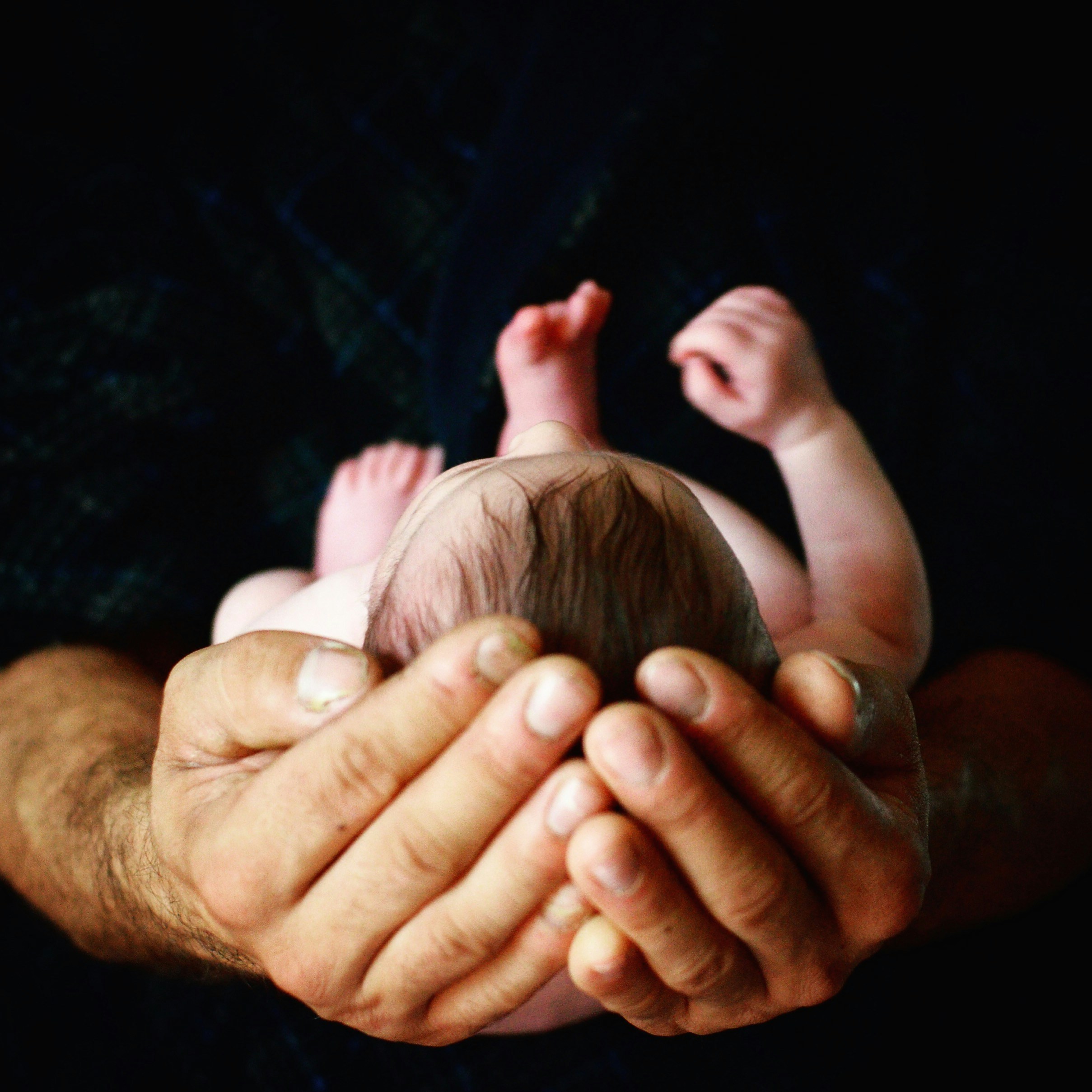
In a few days, my third grandbaby will be born. When he makes his anticipated entrance into this world, he will be placed in the nurturing arms of his mother. He will be held by his father and surrounded by loving siblings, grandparents, aunts, uncles, and cousins. He will be well loved, cared for, fed, and protected. This is by God’s design. When we are born into the world, we are born into a family.

The day we are born is significant. Most celebrate it each year. Yet, Christians understand that their physical birth is only their first birth. Every Christian has a spiritual birth. Jesus said to Nicodemus, “I say unto thee, except a man be born again, he cannot see the kingdom of God,” John 3:3. This new birth changes everything. Old things have passed away; all things have become new. Stony hearts are replaced with hearts of flesh. And where we were once children of wrath, the new birth makes us children of God, granting us eternal life with Him.

When we are born again, we should also be joined to a family of believers.  In this family, we are fed by elders (1 Peter 5:2), and the older teach the younger (Titus 2).  The strong in the faith help restore those overtaken in faults (Galatians 6:1).  The brethren lovingly exhort and warn the unruly (I Thessalonians 5:14).  We encourage one another daily so that sin will not harden hearts (Hebrews 3:12-13).  And we love those in sin enough to have compassion and make a difference in their life.  Jude 22-23 says, “And of some have compassion, making a difference: And others save with fear, pulling them out of the fire; hating even the garment spotted by the flesh.”

The idea of experiencing salvation without belonging to a local church is foreign in the New Testament. When individuals repented and believed in Christ, they were baptized and added to the church (Acts 2:41, 47; 16:5). They did not live out a private commitment to Christ. They joined formally with other believers in a local assembly and devoted themselves to the apostles’ teaching, fellowship, the breaking of bread, and prayer (Acts 2:42).

It is also important to note that the New Testament epistles were written to churches, not individuals. In them, we read about the significance of one another. The scriptures call us to love one another, honor one another, edify one another, admonish one another, care for one another, serve one another, restore one another, bear one another’s burdens, and be kind, tenderhearted, and forgiving toward one another.  We are to teach one another, comfort one another, exhort one another, and consider one another.  The Bible says we are to confess our sins to one another, have compassion with one another, be hospitable to one another, minister to one another, and fellowship with one another.[i] It is easy to see a theme here.

Salvation is personal, but the Christian life is not. Just as children who are orphaned, abandoned, and left to themselves can face harm or failure to thrive, so can children of God without a family. God designed us for accountability.  We need each other.  It was never intended for the child of God to be an island unto themselves.  I can’t imagine my grandson being born and left to himself without love, care, and protection. I can’t imagine him not having nourishment or his needs provided for.  Every child born needs and deserves a nurturing family to thrive. In the same way, every born-again child of God needs to be a part of a family, the local church.


[i] John 13:34, Romans 12:10, Romans 14:19, Romans 15:14, I Corinthians 12:25, Galatians 5:13, Galatians 6:1-2, Ephesians 4:32, Colossians 3:16, I Thessalonians 4:18, Hebrews 3:13, Hebrews 10:24, James 5:16, I Peter 3:8, I Peter 4:9-10, I John 1:7

Hating, Losing & Fighting: The Key to a Strong Marriage

My husband and I just celebrated our 32nd wedding anniversary. It’s been an exciting and glorious journey that began when we were just young kids. We’ve grown up together not only in age, but also in our Christian walk. We’ve raised 3 children and walked, hand-in-hand, through this life leaning on the Lord. Our marriage has been filled with laughter, tears, joy, pain, dreams, disaster, anticipation over the future, and fear of the unknown. At times it was too easy to be true and at other times it was harder than we thought we could bear. We learned early that fleshing out “two becoming one” was sometimes messy. We recognize that the sin nature we all have, along with living in this dark world, often makes marriage difficult. It’s not easy and having a God-honoring marriage is even harder.

If you and your spouse strive to live in a way that honors God, be prepared for a spiritual attack. Biblical marriage points people toward God. He ordained marriage. It is a picture and witness to this world of Christ and His Church (Ephesians 5:31-32). It is good and holy. And Satan hates everything about it. He wishes to destroy your marriage (along with your life, testimony, and family). We need to be watchful because our adversary, the devil, is a roaring lion, walking about seeking people to devour (1 Peter 5:8). He often uses the troubles of this world to divide husband and wife. He’s crafty and knows how to tear couples apart. He would love nothing more than for you to give up on each other, throw in the towel, and say that marriage is too hard.

The enemy is against us; the world is against us; and our own weak flesh battles against us. It is tempting to live in defeat. But, if you are a child of God, in Christ you are victorious! He has already overcome the enemy (Revelation 20:10). Those that are born of God have overcome the world (1 John 5:4). And even our flesh has been defeated (Romans 6:6). We can walk from victory unto victory if we choose.

My husband and I have seen our share of trials and troubles over the past 32 years. Through it all, we’ve grown closer to Jesus and each other. Our love is deeper and stronger with each trial. And we’ve learned the important aspect of hating, losing, and fighting in our marriage.  That’s right, you didn’t misread this.

To be victorious you must first learn how to hate. Did you know that love and hate go hand in hand? If you love children, then you will hate seeing children abused or murdered in the womb. If you love freedom, then you will hate bondage and slavery. If you love God, then you will hate the things that are against God. To have a strong, godly marriage you must hate how the world has tried to distort marriage. You must hate divorce. You must hate the things that tear marriage apart and you must both stand on that conviction when marriage gets hard.

You also must learn how to lose. I know, we live in a win-at-all-cost society, but a couple who lives victoriously will lose. They will lose their pride. They will lose their selfishness. And they will lose all things that try to pull them away from God and each other.

And finally, you need to fight! When troubles come, and life gets hard, our eyes often become fixed on our problems. Words get spoken in haste and fighting begins. It may even seem that your spouse is the enemy. But, dear Christian, our fight is not against flesh and blood, but against “principalities, against powers, against the rulers of the darkness of this world, against spiritual wickedness in high places” (Ephesians 6:12). Don’t fight each other. Work together. Build your marriage on the foundation of Christ. Position yourselves at the door of your home and press back against the darkness of this world. Fight the enemy with the Word of God. Stand with conviction, be committed to the cause, and take courage, dear saints. When life gets hard, remember that the battle is the Lord’s. 

Find out more about having a biblical, God-honoring marriage from Dana & Kimberly’s book The Eden Concept: Marriage God’s Way athttps://www.amazon.com/dp/1983938343

I Can’t Afford It

Advent

Tempus Fugit.  In Latin it means, time flies. How true it is! Here we find ourselves at the end of a year almost gone. As it winds down it is a good time to pause and reflect on the year’s blessings and on the things that matter most in life. That’s why I love the Advent season observed for the 4 weeks leading up to Christmas.

Advent is a season of faith, reminding us of Christ’s humble birth. Our Lord emptied himself. He came to earth and was born in a lowly stable. Surrounded by filthy animals and meek shepherds, He took on the form of a servant.

Advent is a season of peace, reminding us that God’s Son came to suffer and die on a criminal’s cross. He humbled himself and was obedient so we might be reconciled with Him. It is only through Him that we find true peace on earth.

Advent is a season of hope, reminding us that all the prophecies concerning Christ’s first coming were fulfilled. And, we have full confidence that the prophecies yet to be fulfilled will soon come to pass. We look forward with hope and eager anticipation of His second coming.

Because time truly does fly, I find it important to reflect upon my life this holiday season.  As I celebrate, am I celebrating the true meaning of Christmas?  As I give gifts, do I stop and ask the Lord what He wants me to give Him?  And as I pray for God to shower blessings upon me, is my heart’s desire to be a blessing to Him?  These are the things that will matter when time is no more.

God has filled this year with open doors, joy, laughter, and too many blessing to count! He is good, all the time! But the truth is that this year has also been filled with shut doors, lost loved ones, pain, disappointment, and tears that only He knows about. This is life, but it’s also why the Advent season is so wonderful. Yes, it’s a celebration of what was done but also an anticipation of what is to come. One day very soon God will wipe away all tears. There will be no more death, sorrow, crying, or pain. The former things will pass away, and He will make all things new!

Are you prepared for His coming? Tempus Fugit. It is the most important question you can ask yourself. God who is rich in mercy, sent Jesus to suffer and die so He might take the punishment for our sin. On the third day He rose from the dead—showing the penalty of sin fully paid. God commands men everywhere to repent and put their faith in Christ alone for salvation. May I plead with you to cry out of God, confess, and forsake your sins. Trust in what Jesus did for salvation, not in your own deeds. If you do that God promises eternal life, true peace, and a new heart that will desire righteousness. And then may your heart cry out with mine this Advent season — O come, O come, Emmanuel.

Silent Night. Quiet Morning.

It’s Christmas morning. Piano music drifts sweetly from the Alexa in the kitchen as I sip a cup of coffee. All is calm. My husband sits in his recliner reading something while the pups chew on a new water buffalo horn. All is quiet.

Years past looked different. I would fall into bed exhausted on Christmas Eve after finally getting everyone ready for bed. I’d wait for the children to fall asleep and sneak into the living room to grab the stockings. Filled with goodies and gifts I’d quietly return them to the living room. Christmas morning came early and burst with excited children, laughter, homemade cinnamon rolls, presents, stockings, candy, toys, and games. Then we would be off to visit grandparents, cousins, aunts, and uncles.

But I blinked and my children grew up. They spent Christmas Eve with other family and significant others last night. As my husband and I sat quietly at the breakfast table this morning we reminded each other that this is exactly what we worked so hard for. Our goal was to raise them in the nurture and admonition of the Lord and have fun doing it. Then shoot them out into the world as arrows in the hand of a mighty man. We want them to have their own families and their own Christmas traditions. We want them to look forward to coming back home to visit.  I’m at peace with this quiet Christmas morning and season of life.

Every season is beautiful. As I contemplate the years my mind wonders to things the mother of Jesus kept in her heart. After the birth of Christ and the visit by the Shepherds, scripture tells us that “Mary kept all these things, and pondered them in her heart,” Luke 2:19. No doubt that as her Son grew and begin His earthly ministry she reflected on those early wonders. No doubt that as she beheld Him upon the criminals cross her mind went back to the cradle and the prophetic words of Simeon that, “Yea, a sword shall pierce through thy own soul also,” Luke 2:35. And there is no doubt that after the resurrection of Christ there were mornings Mary sat in silence and pondered the fleeting years with her Son. How she must have anticipated the day she would once again behold His glory face to face.

Likewise, I look with anticipation to the day we shall behold Him—the Lamb of God that takes away the sins of the world. My prayer is that until then, I live a life pointing others to Him. I pray that my children and grandchildren see Jesus in me and that my days are filled with service to Him. I’ll spend this quiet morning in prayer for them and ask God to continue to shine His face upon them. Then tonight we’ll all gather at church for a special candlelight service. Afterwards, they will spend the evening and next day at home once again.

Christmas pups, 2022

When the Sun Comes Out

sun When we were in South Mississippi we lived in a home that was surrounded by acres and acres of National Forrest. During the summer months, after the children went to bed my husband and I would love to take evening swims. In the darkness of the night we would look into the heavens at the thousands of stars shining so bright. The contrast of the stars against the blanket of darkness was striking. This is how I picture the Christian’s life. We let our light shine before men in an extremely dark world.

It is certainly dark times. Today’s headlines, like all others, include stories of war, scandals, terrorism, and murder. One story that depicts the nature of our world in such a clear fashion is this one. A Chinese baby boy is rescued alive after being flushed away. I am a mother. The thought of a mom giving birth to a child and then being able to take that child and flush it down the toilet as human waste or garbage is inconceivable. I can’t even comprehend the cruel heart that could do such a thing, other than the fact that we are told in Jeremiah that the heart is deceitful above all things and desperately wicked (Jer 17:9) and that one of the characteristic of the ungodly is being “without natural affection” (Rom 1:31, 2 Tim 3:3).

So these gloriously dark times are grand opportunities to shine.

Look at how Daniel describes the wise. “And they that be wise shall shine as the brightness of the firmament; and they that turn many to righteousness as the stars for ever and ever,” Daniel 12:3.

That right! You are a star!

At least those with heavenly wisdom, who point others to God, shine as stars in the darkness!

But what happens to the stars when the sun comes out?

They fade away.

John the Baptist understood this concept. He said, “He must increase, but I must decrease,” John 3:30.

Our purpose as light in the darkness has never been to point others to ourselves. We don’t shine for our glory. We point others to God, for His glory. Jesus told his disciples, “Let your light so shine before men, that they may see your good works, and glorify your Father which is in heaven,” Matthew 5:16.

We shine in this dark world so that others are pointed to our heavenly Father. But one glorious day, the Son whose “countenance was as the sun,” (Rev 1:16) will return and all darkness will be driven away for all eternity.

Until that day, dear Christian friend, keep shinning!

Why Our Church Doesn’t Celebrate Easter

easterWith the Easter holiday just a few days away there is a lot of talk about the subject. But this Sunday we will not be celebrating “Easter” but rather the Resurrection of our Lord and Saviour, Jesus Christ. Below are a few reasons as to why:

  •  Ignorance is NOT bliss. Read I Peter 1:14-21. As a Christian every word, action, and deed should be done for the glory of God. To celebrate is to observe, show happiness, or mark an occasion. At the least, do a study on the origins of “Easter” before deciding to observe it.
  • Words mean things. After a careful study, why would you even want to use the word “Easter”? What purpose does it serve to call your celebration by that word? Isn’t Resurrection Sunday a better, more accurate description of what we are celebrating? Which one points more people to God?
  • The Easter symbols of bunnies and eggs are distracting at best. Really, what does it have to do with Christ’s resurrection? I haven’t figured that out yet. However, these symbols have plenty to do with fertility and pagan ideas.
  • “It’s just for fun” is counterproductive. The world and Satan will always win when it comes to providing fun. The church is to be the “pillar and ground of the truth” not entertainment centers. An attempt to compete with the world in this area cheapens the Bride of Christ.
  • It is confusing to children. When we play around with the world’s ideas our children become unstable and unsure of what to believe in. The same thing happens when we tell children that Christmas is about the birth of Christ while playing the Santa game. Or when they get older we allow them to be indoctrinated with evolutionary teaching and then give them an hour a week in Sunday school to learn about the Genesis account of creation. Our children are confused and no wonder. We allow these things to affect them and then question why 80% leave the church by the end of high school.
  • What you draw people with is what you draw them to. A church can use an egg hunt to draw people in (or any worldly event for that matter), but when we draw them in with activities, promotions, and such we are drawing them to those things. When we use the pure, unadulterated Word of God to draw people in, it is Christ alone that they are drawn to. “Set your affection on things above, not on things on the earth,” Colossians 3:2.
  • We are called to be holy. We are to be set apart and peculiar. I’m afraid many have forgotten this. It is hard to be set apart while being the same. “But ye are a chosen generation, a royal priesthood, an holy nation, a peculiar people; that ye should shew forth the praises of him who hath called you out of darkness into his marvellous light: Which in time past were not a people, but are now the people of God: which had not obtained mercy, but now have obtained mercy. Dearly beloved, I beseech you as strangers and pilgrims, abstain from fleshly lusts, which war against the soul;” 1 Peter 2:9-11.

We do as a church celebrate the resurrection of our Lord and Savior. The resurrection is, in fact, the hinge-pin of all of Christianity. Without it there is no hope. Without it our faith is in vain. Without it our loved ones would be gone for good. Without it we would still be in our sins. “If in this life only we have hope in Christ, we are of all men most miserable,” 1 Corinthians 15:19. But thank God we are not most miserable. Because of the resurrection of our Lord there is hope! The grave has been conquered! Sin not longer reigns! And death has no sting! This Sunday we will celebrate Resurrection Sunday with the living Christ being glorified, and his death and resurrection being preached!


*note:   My 16 year old son’s comment to this article was, “Mom, That was great. I agree with everything you said, but I think you will make people mad with your words.” So in reply to “making people mad” let me just say that is certainly not my intent. I hold no judgment over anyone. How you choose to celebrate is between your conscience and God alone.

I write because there are so many misconceptions and fallacies regarding the church. Dear Christian, never forget that the world is watching us. They want to know if what we say we believe is real enough to make a difference in the way we live.

Too many have a form of godliness, but deny the power (2 Timothy 3:5). They are denying the power of the Word of God to work in their life (1 Thessalonians 2:13). They are denying the power of Christ to crucify the old man (Romans 6:6). They are denying the power of God to keep them from practicing a lifestyle of sin (1 John 3:9). They are denying the power of the Holy Ghost to teach them spiritual things (1 Corinthians 2:10-13).